Showing posts with label evasion. Show all posts

Tuesday, April 23, 2019

More Info + Better Analytics = Less Tax Evasion: Guest Post by Gaute Solheim

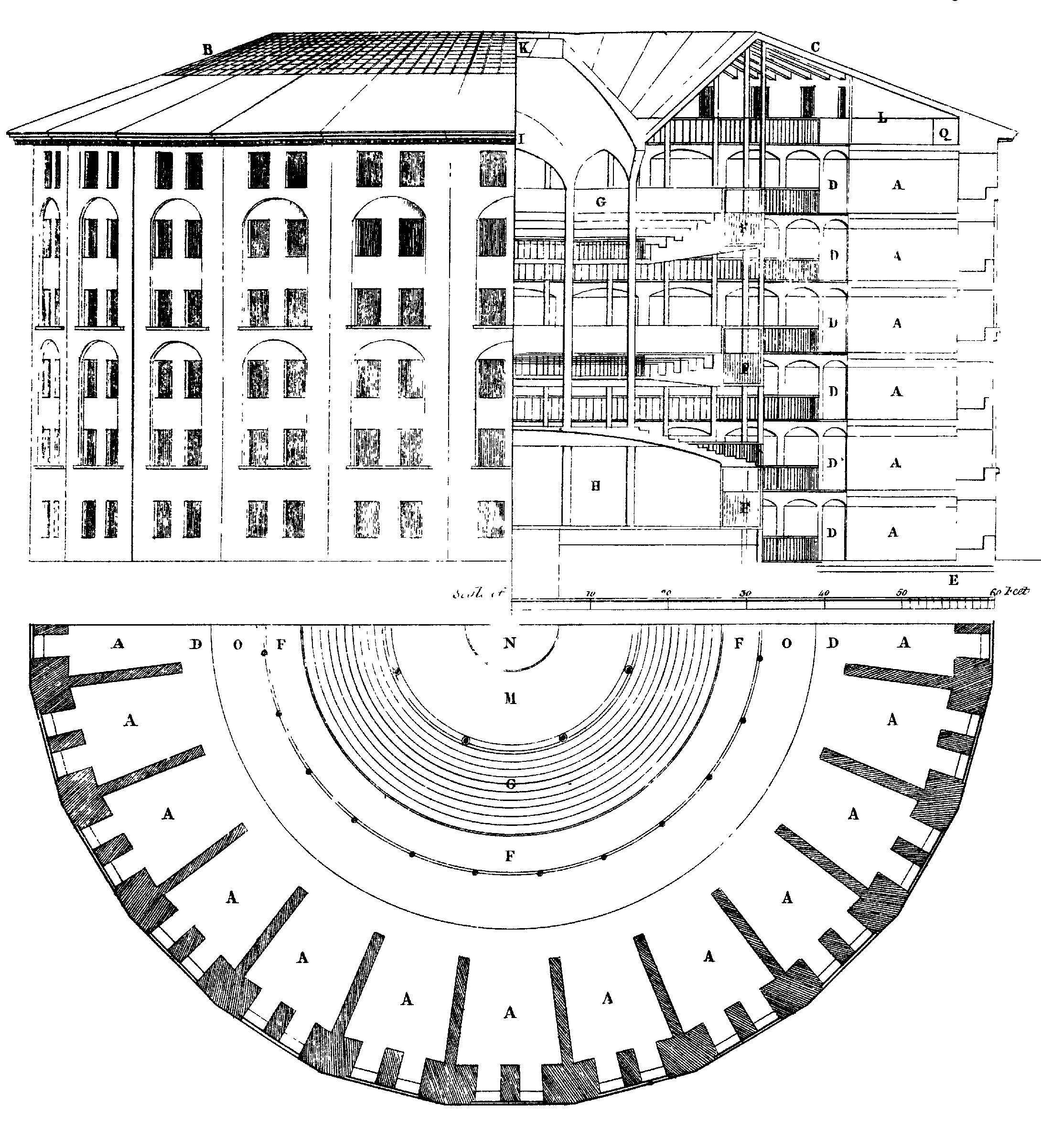
There is little doubt that information is key to effective taxation, and that modern data collection systems are making tax administrators' (and in some ways, honest taxpayers') lives much easier.  I am personally wary of governments (or anyone) amassing all of the data gathering and analytic tools they might like, because I am concerned that life in the panopticon will not be tolerable for lots of reasons. My tolerance for leakage in taxpayer compliance to forestall the complete surveillance of all human activity by government may be higher or lower than others; I am not sure. But the following guest post by Gaute Solheim of the Norwegian Tax Administration gives a nice summary of the tax administrator's more optimistic view. Cross posted from the Surly Subgroup.

Do You Really Need More Information?

By Gaute Solheim, Senior Tax Advisor, Norwegian Tax Administration 

(Mr. Solheim writes in his individual capacity and does not purport to represent the views of the Norwegian Tax Administration.)
In a previous post, I explained with reference to the Cui 2017 paper on Third Party Information Reporting (TPIR) why I expect good quality TPIR, based on a primitive analysis of the human factor in corporate filings. When I started rereading Cui’s paper, I only read a few lines before a chapter heading from the CIA textbook “The Psychology of Intelligence Analysis” popped into my mind: Do you really need more information? That book contains a full chapter (starting on page 51) on how more information sometimes contributed nothing to the quality of the analysis, but was of immense help for the confidence of the analyst.
I will below make my argument for why the answer should be “yes” when it concerns the TPIR data mentioned by Cui in the paper, but it is a qualified yes. TPIR is a bit like cooking. Fantastic raw materials will not end up as gourmet meals on their own. You need a talented and skilled chef and a kitchen with the right tools, as well.
Having spent some time on capacity-building with less developed tax administrations than the Norwegian, I agree with Cui that establishing a TPIR machinery should not be the first priority in these countries. However, TPIR being the wrong starting point for some developing countries is not an argument for abstaining from it in Norway and other jurisdictions with better-resourced administrations. I will below state my case for why I find TPIR useful based on my observations working for the Norwegian Tax Administration (NTA) (which may of course differ from the opinions of the NTA itself).
My knowledge of U.S. or Canadian use of TPIR is limited, but there is a very fascinating story told in a paper by Keith Fogg about the work of the IRS agent Joe West. It is a story starting with an audit in the late eighties continuing into the nineties and ending with the IRS getting a summons for credit card information linking US taxpayers to bank accounts in the Caribbean. That information eliminated credit cards as an easy means of taxpayer access to evaded funds.
Norway was quick to copy and paste the IRS methodology. First as specific requested information. Then, a few years later, TPIR routines were in place, giving us digitally all the credit card transactions from financial institutions. The information was used in a large audit project identifying Norwegians with undeclared financial wealth in other jurisdictions. It did not take long before it was common knowledge among taxpayers that this modus operandi did not fly anymore. The value of this TPIR as a tool to uncover hidden wealth and income in foreign jurisdictions diminished quickly, as measured in volume of reassessments.
Warning: Do not use for tax evasion
Collection of TPIR is not without costs, and after some years, the extra revenue from reassessments probably did not cover the total cost of the collection of this dataset. One could then conclude that this was a big heap of worthless gigabytes. To me that would be flawed logic, like concluding that a fence is pointless if you never find anyone on the wrong side of it. TPIR done right is to a large extent automated audits. Taxpayers knowing that they will be selected for audit on specific issues are inclined to stay compliant or shift to another, more cumbersome, modus operandi like diamonds in a toothpaste tube (see here and here). The toothpaste modus operandi had a shorter life span than the credit card scheme, and then we got FATCA and CRS.
Calculating the value of TPIR as a mental fence keeping more taxpayers inside the compliance triangle would be a hard nut to crack. I will not even try, but I would be surprised if it was insignificant. The story starting with IRS agent Joe West auditing Dorchester Industries and owner Frank Wheaton Jr. in the eighties, and ending in Norway with a lot of TPIR data with few reassessments illustrates a life cycle. It started with tax authorities going out and collecting specific third-party information needed for cracking cases with serious tax evasion; it was later streamlined as part of the TPIR system; and it ended up as mental fences for tax compliance. Today, that specific TPIR has other analytical uses for the NTA as well.
Almost all the numbers needed for producing a correct tax return for the majority of personal taxpayers in Norway already exist digitally on some third party computer somewhere. The number of sources is much smaller than the number of taxpayers. Having a system of distributing digital numbers from a small number of sources to everyone, having everyone manually punch the same numbers into different kinds of software on their home computers, and then collect all these numbers—with all their typing mistakes—does not make sense to me. It did not make sense in 2010, either. For most Norwegian taxpayers, it has not made sense the last two decades.
The main use of TPIR in Norway today is to prepopulate individuals’ tax returns, which are then made available for the taxpayer for correction and amendments. All of this ensures that we may handle millions of tax returns untouched by humans, including auditing every single entry in most of them. The NTA can do this by relying on recycling of existing data established by the business sector as part of its recording of business transactions. Businesses do it on computers with software designed to handle these exchanges of information. It means that, as a taxpayer, I may go skiing this weekend instead of sitting indoors punching numbers into some tax program on a sunny winter weekend. I love it both as a taxpayer and from nine to five as a tax auditor.
A new deduction wanted by the Norwegian government illustrates why TPIR is the way to go. The government wants personal expenses for toll roads to be deductible from income. There is a logic behind that, but that’s not my focus. The public toll roads are 100% digital and all payments are linked to an identified person. To avoid double deductions, the gross toll road payment must be reduced by the amount each individual has reclaimed from his employer or deducted as business expenses. A large part of these toll payments sits as digital information on the servers of the employers.
The NTA’s way of thinking is that TPIR is our friend. The payments on cars registered to non-business people may be reported as TPIR from a few toll road operators. The correction for reclaimed or already deducted payments may be one more item in the existing TPIR filing from employers on each employee. We do not know at this stage what percentage of all the tax returns we may prepopulate with the correct deduction by using TPIR, but we are aiming very high. Designing the compliance program for this deduction without TPIR is not a tempting alternative.
Establishing the infrastructure needed for TPIR of a specific set of data is the main cost. The exchange itself is comparably very low cost if the software doing the job is well designed and integrated in the data systems of the reporting entities. Ask any tax manager, and they will tell you that tax auditors asking for information that the Enterprise Resource Planning (ERP) software (which manages business processes and accounting) is already programmed to produce is a small burden compared to collecting ad hoc sets of data that the ERP is not programmed to report.
We could do targeted audits, waiting three to five years and launch an identical audit program, collecting the same dataset ad hoc, and then spend a lot of resources on sorting out all the mistakes and non-compliance uncovered by the audits. It does not make sense in 2019 to operate like this. It is much more cost efficient to do the work needed to design the software and needed infrastructure that ensures that there will be a steady flow of good quality TPIR.

Within the OECD, there is a program called SAF-T, Standard Audit File for Tax. The core of this is that businesses must run their accounting on software designed for exchange of data in a standard digital format. When this is implemented, my guess is that we will see a new drop in cost per gigabyte TPIR, and it will certainly reduce the taxpayer’s cost of handing over data in response to ad hoc requests. Portugal is at the forefront of using SAF-T, with ten years of experience, generating gigabytes of TPIR monthly on VAT transactions and much more (see here and here).
The constant expansion of what tax administrations receive as TPIR should also influence the more rational taxpayers. They now know that you never know what the next dataset will be. Would you engage in a toothpaste scheme if you knew that FATCA was two years away? What tax administration veil of ignorance will be the next to fall with the help of TPIR? It gets harder and harder for the taxpayer to rationalize away the risk of future exposure of presently hidden activity.
I will restate that TPIR is a superb ingredient in the hands of a skilled chef in a well-equipped kitchen, but add that you really need a close partnership with your suppliers to make it happen without prohibitive costs.
Yes, we really need more information.

Tuesday, July 5, 2016

Canada "Tax Gap" Study Released

The Government of Canada has released its first study of the "tax gap," which the Government defines as "the difference between the tax that would be paid if all obligations were fully met in all instances, and the tax actually paid and collected." The Canada Revenue Agency (CRA) has not completed a study of the income tax, but has released this paper on the concept and methodology. It has presented a report for GST/HST (Canada's VAT), estimating the tax gap to average about 5.6% per year over the period 2000-2014. For 2014, this produced an estimated tax gap of about $4.9 billion:


This study has been undertaken after many calls from academics and nongovernment organizations, including Canadians for Tax Fairness, which according to the CRA will be involved in consultations regarding the ongoing study. Canadians for Tax Fairness estimate that Canada loses $7.8 billion in income tax revenues to "tax haven" use, a number they constructed using Statistics Canada's foreign direct investment data.

The Government acknowledges that there is no reliable method for measuring the tax gap, and that the exercise is one in speculation based on imperfect information:
There are a number of challenges facing tax administrations undertaking tax gap estimation. The key challenge is access to the comprehensive and good-quality data necessary to produce estimates. A significant proportion of the tax gap involves unreported or under-reported income and assets and economic activity that are deliberately hidden from the government. As a result, many countries that publish tax gap estimates highlight their uncertainty.
Expect more to come from this exercise as the tax gap study is a key component of the Government's pledge to spend $444 million over five years "to enhance [CRA] efforts to crack down on tax evasion and combat tax avoidance."

Tuesday, April 19, 2016

Evasion, Avoidance, and Bashing Panama in a World of Aggressive Tax States

I've talked to a few journalists and commented a bit on the Panama Papers (e.g. here at 6:09 and here) but I've refrained from writing much to date because I am uneasy about a couple of central themes in this story: first, the constant confluence of tax evasion and tax avoidance, which are two completely different phenomena that require two very different responses in my view, and second the bashing of Panama as if only bad things can be done there, so anyone who does anything there from anywhere else must be doing a bad thing.

I am uneasy about this bashing because, although I think there are bad guys doing bad things in Panama, I also think there are bad guys doing bad things all over the world and I don't like Panama being singled out; I am also wary of suggesting that in a world of global trade and investment flows, anything and everything done through or with Panama must eternally be tinged with a sense of wrongdoing. This sense seems to imbue the imagination in the campaigns to "shut down the tax havens." What, exactly, does that mean? Does it mean that some countries, because someone decides they are mostly bad actors, must be effectively cut off from the global financial system and no one must be allowed to transact with or in these countries from the outside? What if most of the world are actually bad actors, each scheming to use its tax system to undermine and undercut the others? That's essentially the vision drawn by the OECD in countering BEPS, so we will run into some problems if we take this reasoning to its logical conclusion. But if this is not the idea behind shutting down tax havens, then what is envisioned, exactly?

Tax justice advocates seem to envision an invasive global regulatory regime in which every person in the world will have all of their assets and financial information catalogued and tagged and made public to everyone else, in order to make sure no one can break any tax rules. If this is being done just for tax--that is, if this is what it takes to make the income tax "work," I am not sure that the income tax is worth all of that trouble and everything given up to achieve it. That includes privacy, which appears to itself have become a suspicious word in certain circles, as if only those doing bad things have a desire to keep anything about their lives private. Let us recall Glenn Greenwald's words on why privacy should not come to be seen as a sinister desire. It is possible to break the tax law like it is possible to break any other law. But is requiring everyone to show all of their assets to everyone else in order to prove no laws have been broken a valid response to this enduring problem? I cannot agree with this Orwellian vision of the world. I also do not think this view is sensible if the issue is really driven by tax. If it is, then surely we can find a less invasive way to fund public goods and services.

This brings me to the evasion/avoidance point, which I find being abused just as much by lawmakers and policy advocates as it is by journalists who don't know any better.

Tax evasion is a crime that involves hiding things from a legal authority. Tax avoidance is not a crime that involves hiding: it is achieved in full view of the legal authorities. The former is a very very difficult problem but is not primarily a tax policy problem. Instead it is primarily a global financial system problem that is created, like most global financial system problems, by virtue of the difficulty of regulating behaviours in a world in which technology has moved us far beyond the frontiers of the nation state.

On the other hand, 'aggressive" tax avoidance (loosely speaking; more analysis here)--that is, avoidance not intentionally allowed by rules such as those to defer tax on retirement savings--is a tax policy issue. Taxpayers and their advisers are always going to cook up new schemes to get around inconvenient tax rules. Knowing this, regulators must decide whether and how to react. They may react with any number of tools that create an infinite call and response loop among regulators, taxpayers, administrators, and judges. These include such things as general and specific anti-avoidance rules, uncertain tax position disclosure, and random audit strategies. None of these things has the first thing to say about how to deal with a corrupt government official who steals money from the public fisc and invests it in US and European stocks and bonds through a maze of trusts and companies formed in other jurisdictions. It's just a totally different problem.

I know and understand that bad guys are always lurking around to defeat the tax law, as they are in any regulatory field. I don't have any special insights about how to deal with corruption and criminality. But in my experience with tax, when a government moves to "crack down" on bad guys, the really serious criminals--including government officials themselves--all too often escape while everyone else finds themselves increasingly tracked, surveilled, and treated like criminals even as the resources to cope with fixable tax policy flaws diminish. I don't have any answers for these worries.

Wednesday, October 14, 2015

Cockfield: Big Data and Tax Haven Secrecy

Art Cockfield has posted a new paper on SSRN, Big Data and Tax Haven Secrecy, forthcoming Florida Tax Review. The article sets out research he did with the International Consortium of Investigative Journalists (ICIJ) and is of interest. Here is the abstract:
While there is now a significant literature in law, politics, economics, and other disciplines that examines tax havens, there is little information on what tax haven intermediaries — so-called offshore service providers — actually do to facilitate offshore evasion, international money laundering and the financing of global terrorism. To provide insight into this secret world of tax havens, this Article relies on the author’s study of big data derived from the financial data leak obtained by the International Consortium for Investigative Journalists (ICIJ). A hypothetical involving Breaking Bad’s Walter White is used to explain how offshore service providers facilitate global financial crimes. The Article deploys a transaction cost perspective to assist in understanding the information and incentive problems revealed by the ICIJ data leak, including how tax haven secrecy enables elites in non-democratic countries to transfer their monies for ultimate investment in stable democratic countries. The approach also emphasizes how, even in a world of perfect information, political incentives persist that thwart cooperative efforts to inhibit global financial crimes.

Saturday, January 17, 2015

Engineers Without Borders Panel on "Illicit Financial Flows"

Tomorrow I will be participating on a panel on "Illicit Financial Flows" at the Engineers Without Borders 2015 National Conference, currently taking place in Montreal. The goal of the session is to discuss the nature and impact of so-called illicit financial flows in Canada, the United States, and the world's developing countries.

I have been asked to address the question "what promising policy instruments or reforms could potentially curb outflows of illicit finance?" The use of the term illicit in this context seems to be an attempt to elide the distinction between avoidance and evasion. Those familiar with my work know that I approach this terminology with caution because I think it is a mistake to conflate evasion and avoidance into a single category for purposes of advocating generalized policy reform. In a paper I published last year on Evasion, Avoidance, and Taxpayer Morality, I argued why I think the phenomenon of tax evasion is distinct from tax avoidance, each represents a different type of governance failure, and each requires a tailored response. But I certainly understand the instinct to see both tax avoidance and tax evasion as essentially drains on public resources that we'd like to imagine would otherwise be available for various socially useful projects.

I'll try to lay out the field as I see it in the time allotted. It is a big topic to cover in a limited time. I suppose I could just plug Martin Hearson's very good work on this subject. I am curious as to how Engineers Without Borders came to concern itself with this issue; the rest of the conference focuses on innovative, sustainable, and inclusive development.  I think it is another sign that tax justice advocacy groups, like the Tax Justice Network, are successfully inducing NGOs across a broad spectrum to view taxation as a human rights issue that permeates all facets of social and economic development.


Saturday, April 20, 2013

Thoughts on the "you first, no you first" provision in Norway's FATCA agreement with the US Treasury

Norway signed an IGA with the US Treasury on April 15.  I blacklined the Norway agreement against the Model 1 FATCA, (you can download the comparison here) and note that some of the regular features appear, including deemed-compliance status for pension funds and "local" banks* but want to address in this post what I'll call the "you first, no you first" provision in Article 4, paragraph 6.

Some FATCA watchers were surprised to see this paragraph, and I admit I had not noticed it before so I assumed it was new--until I blacklined it and found that no, that paragraph is in the Model 1 Agreement (however it is not in the IGAs with Mexico or the UK), and the Model language is identical to that in the Norway agreement.

In any event, having now read this Art. 4 paragraph 6 more closely, I notice there is actually a good bit of maneuvering going on here. Here is the language:

6. Coordination of Timing. 
Notwithstanding paragraphs 3 and 5 of Article 3:
a) Norway shall not be obligated to obtain and exchange information with respect to a calendar year that is prior to the calendar year with respect to which similar information is required to be reported to the IRS by participating FFIs pursuant to relevant U.S. Treasury regulations;
b) Norway shall not be obligated to begin exchanging information prior to the date by which participating FFIs are required to report similar information to the IRS under relevant U.S. Treasury regulations;
c) the United States shall not be obligated to obtain and exchange information with respect to a calendar year that is prior to the first calendar year with respect to which Norway is required to obtain and exchange information; and
d) the United States shall not be obligated to begin exchanging information prior to the date by which Norway is required to begin exchanging information.

This is actually not at all easy to read (on purpose? One always wonders).  But for sure this does not say, as some readers initially thought, that Norway can wait to give info to the IRS until the IRS begins to give info to Norway. In fact, it rather says quite the opposite. Nor, as I thought when I first read it, does it say that Norway need not exchange until Treasury begins to require equivalent information be reported on Norwegian account holders by US FIs to the IRS.

Instead, it says very simply that Norway need not exchange information with the IRS before the US Treasury regulations require FFIs to begin reporting to the IRS, and the IRS will not exchange info with Norway before Norway starts exchanging. All this use of negatives is confusing so let me try to put it in positive terms: it in effect says that Norway will start giving the IRS info once the IRS requires FFIs to begin reporting per the Treasury regs. Notice that Treasury makes no affirmative commitment on the part of the IRS to actually exchange thereafter--only that in any case it will not exchange before Norway does. It implies that it will be obligated to automatic exchange thereafter, but I am not sure even that is so clear.

The Mexico IGA--the only agreement that is technically in force right now--should provide ample proof that the Treasury has not committed to actual automatic exchange of information with its IGA partners (regardless of para. 6), and certainly that the Treasury is not going to go first. On the contrary, Treasury has only said that it will begin requiring US banks to provide the IRS with information on IGA-country account holders, which could be exchanged with such IGA partners if Treasury determines that such sharing would be appropriate. According to the Treasury, "Even when [an info exchange] agreement exists, the IRS is not compelled to exchange information… if there is concern regarding the use of the information or other factors exist that would make exchange inappropriate.”

No word on what those other factors might be, so read this as a broad grant of discretion to the Treasury, with no accountability required toward the IGA partner.

Mexico, it appears so far, has not yet been given the green light, so I can only assume that the status quo right now is Mexico dutifully turning over (on a monthly basis I believe) IGA-compliant information, while the IRS provides Mexico nothing in return. You might like to see what the American Banking Association thinks about this status quo. I think it is safe to say that the Florida and Texas Bankers Associations are determined to at minimum delay reciprocal automatic information exchange as long as possible, if they cannot eliminate it all together.

Now, if I have these facts incorrect and the IRS is actually exchanging information with Mexico under the IGA, I hope that someone will please correct me right away because this is tremendously important--as I have suggested before, the information Mexico could get from the IRS under such an arrangement could be explosive in terms of exposing the volume and direction of tax evasion as between these two countries (not that the public will get much or any information on these things--on the contrary we most likely will learn absolutely nothing, more's the pity).

One might say the USA won't similarly refuse to share information with Norway as such behavior smacks as bad faith, and countries have a positive duty to on the contrary act in good faith with respect to "international agreements". Moreover, it strains credulity to think that Treasury would start collecting information on Norwegian account holders from US banks, without actually planning to share it.

To that I would counter, presumably Norway knows exactly what it got in this deal: the same promises as have come before.

This is consistent with the rest of the IGA, which suffers from the same lack of reciprocity that in my view belies the character of these instruments as international agreements at all, even beyond their likely constitutional violation in the USA.  I recently wrote an article about the lack of reciprocity in the IGAs, why I think that is so problematic in terms of creating a perverse market advantage for the USA to facilitate tax evasion, and why there is not much reason for being optimistic that the necessary sea change will occur to make FATCA a viable multilateral regime with equal applicability to the world's largest destination for foreign capital. You can read that article here, and as alway I welcome feedback, especially to correct any of my misunderstandings.

To sum up, in my view the "you first, no you first" provision adds nothing in terms of greater reciprocity in the Norway IGA, while the same procedural and substantive defects we have already seen continue unabated.

* I also note a new conditionality to the local bank exception, in Annex I Part II.A.(e):
"provided thatNorway provides information on an automatic basis to the relevant Member State;"
This seems to mean that until Norway is actually exchanging info, its local banks will not be deemed compliant but will be withheld upon once the "you first" rule kicks in (i.e., once FFIs must begin reporting per Treasury regs).  

The local bank exception is a get-out-of-FATCA-free card for banks whose account holders--including US citizens--mostly live in the country. I've been told the provision is meant to help Americans living abroad whose local banks are dropping them in the (mistaken) hopes that this will relieve the FI of FATCA scrutiny. I have a lot of trouble with this local bank exception in terms of what the US appears to be trying to do with it, tempering citizenship-based taxation with an escape hatch that potentially encourages and even invited casual noncompliance, but that's a conversation for another day.

My intrigue with the new language in the Annex here is that I'm not sure why this condition applies only to local banks, and not other deemed compliant FIs. Those who think the FATCA regime is now deliberately aimed not at catching HNW Americans living in the USA and stashing cash offshore (few of whom hold large amounts of cash in accounts with their own names attached, as Lee Sheppard has repeatedly pointed out) but instead at imposing upon US citizens living abroad with their middle class wage earnings and their lack of effective representation in Washington, could have a field day with this provision. 


Monday, April 8, 2013

France ups the ante for EU tax evasion

Cahuzac's denials and ultimate admission about hiding money offshore while serving as the anti-evasion officer-in-chief is very embarrassing for France, and so it should be no surprise to see the rhetoric heat up as new allegations surface about his attempts to move the money around in an ultimately futile attempt at subterfuge. From AFP:
J'ai dit quoi?

France said Sunday [ed: France is a country and cannot speak. It is not so difficult to write "French leaders said", and it is ever so much less distracting.]  it was looking to tighten Europe-wide measures against tax evasion as it scrambles to contain a fraud scandal that has rocked President Francois Hollande's government.
...Finance Minister Pierre Moscovici announced that France would seek to reinforce the exchange of banking information throughout Europe, based on a US ruling in place since 2010 that seeks to fight offshore tax evasion.
Well, the "rule" may have been in place but let us recall that it is not in fact yet in force...three years later, we're still working out the kinks over here, and there are many, many kinks.

More:
"I propose that there be an automatic exchange of information, a European FATCA," Moscovici said on Europe 1 radio.
Hollande's government has been shaken by the scandal, which erupted Tuesday after Cahuzac -- once in charge of tackling tax evasion -- admitted to investigators that he had a foreign account containing some 600,000 euros ($770,000). 
...Critics have been quick to round on Hollande and his ministers, accusing them of either trying to cover up the scandal or of mismanagement for having believed Cahuzac's denials.

...Hollande has tried to contain the fall-out from the scandal, saying he was unaware of the account and announcing Wednesday that a new law would be submitted within weeks that will establish greater control over ministers' wealth. 
The law would also ban any elected representative found guilty of tax fraud or corruption from holding any form of public office.
Query whether there would be enough people left to run the world if every country made this same pledge.

Wednesday, February 13, 2013

Hearings on tax evasion & tax havens in the Canadian parliament tomorrow

Meeting of the Standing Committee on Finance beginning at 8:45 in Room 7-52, 131 Queen Street, featuring a fascinating line-up:

Tax Evasion and the Use of Tax HavensFraude fiscale et le recours aux paradis fiscaux
WitnessesTémoins
Canadian Bankers AssociationAssociation des banquiers canadiens
Marion Wrobel, Vice-President
Policy and Operations
Marion Wrobel, vice-président
Politiques et opérations
Darren Hannah, Director
Banking Operations
Darren Hannah, directeur
Opérations bancaires
Canadians for Tax FairnessCanadiens pour une fiscalité équitable
Dennis Howlett, Executive DirectorDennis Howlett, directeur exécutif
Videoconference - Cambridge, United KingdomVidéoconférence - Cambridge, Royaume-Uni
Tax Justice NetworkTax Justice Network
Richard Murphy, DirectorRichard Murphy, directeur
Videoconference - Austin, TexasVidéoconférence - Austin, Texas
As an individualÀ titre personnel
Arthur Cockfield, Professor
Faculty of Law, Queen's University, Fulbright Visiting Chair in Policy Studies, University of Texas


Wednesday, February 6, 2013

Germany rejects Swiss Rubik deal...again

Also from Tax Analysts [again, gated]:
The upper house of the German parliament (Bundesrat) has again voted to reject the agreement with Switzerland aimed at taxing the undeclared assets of German taxpayers. 
This was the Rubik deal: basically, Switzerland won't share any information on individual accounts but will collect withholding taxes and pay them over. Here's a short explanation with a horrid graphic. I haven't discussed the deals much here, but it's had lots of play over on TJN [shorter and more to the point here]--it's a pretty wacky deal, really. I mean, how do you keep anyone honest in terms of withholding and paying over the "right amount" of tax if you can't pry any info from them?  From Tax Analysts:

The agreement was similar to one reached between Switzerland and the United Kingdom. It called for a one-time charge on all undeclared assets held in Switzerland as well as an ongoing withholding tax on income earned in undeclared accounts. The agreement also would have allowed German tax authorities to make a limited number of information requests that would not require the level of detail expected for standard treaty requests. 
Social Democratic Party lawmakers have long objected to the agreement, saying it was too lenient and that tax evaders should not be allowed to remain anonymous.
I take it that the deal was little more than an end run around the European Savings Directive. Certainly with Switzerland talking FATCA with the US it's hard to imagine any country in Europe settling for Rubik's weak tea.

Monday, February 4, 2013

Obama admin taking the high road on FATCA reciprocity?

I have predicted that real FATCA reciprocity would not fly in the US once people began to understand what the details entailed, but I would like to be wrong about that, and I have argued that the best course forward for FATCA is real reciprocity coupled with adherence to residence-based taxation. Here's a sign from the Chicago Tribune that I could get at least one of my wishes:
Foreigners' accounts in U.S. banks eyed in tax crackdown
The Obama administration may soon ask Congress for the power to require more disclosure by U.S. banks of information about foreign clients' accounts to those clients' home governments, as part of a crackdown on tax evasion, sources said on Monday. 
In a move facing resistance from some in the U.S. banking industry, two tax industry sources said the administration was considering asking Congress in an upcoming White House budget proposal for the authority to require more disclosure from U.S. banks. 
...At the heart of FATCA is a law requiring more disclosure by non-U.S. banks of information about Americans' accounts to the Internal Revenue Service, with the goal of exposing Americans' efforts to dodge U.S. taxes through secret offshore accounts. 
As Treasury has implemented FATCA, some countries - possibly including France, Germany and China - were said to be driving a hard bargain. They have been saying that if their banks have to tell the IRS about Americans' secret accounts, then U.S. banks should have to reciprocate by disclosing more information about the U.S. accounts of French, German and Chinese nationals. 
...China has been publicly dismissive of FATCA, but it is talking with U.S. officials behind the scenes, sources said.
...France and Germany "have been asking for something more like full reciprocity," said Jonathan Jackel, a lawyer with the law firm of Burt Staples & Maner LLP in Washington, D.C. 
The story says that "The IRS this year started disclosing to some foreign governments information about bank interest payments earned by their citizens with U.S. bank accounts."--but I am not sure that that is true, given that the only country currently on the list for automatic info sharing on portfolio interest is Canada-and Canada was already on that list anyway.


The story quotes Itai Grinberg, who has to be the foremost expert on the legislation and really ought to be listened to on the underlying principles:
"The United States should be moving toward full reciprocity," said Georgetown Law School Professor Itai Grinberg, a former Treasury official, adding it would be "deeply hypocritical" of the United States to ask for U.S. taxpayer information "without offering some kind of reciprocity."

Progress, perhaps. But this is America, so here comes a lawsuit:

The Texas Bankers Association is considering a lawsuit against the government to stop accountholder information sharing with Mexico, said Eric Sandberg, the group's president.
Why, what s the problem?  Well, you see, it's financial privacy.
"We are concerned with Latin American countries like Mexico," said Fran Mordi, senior tax counsel at the American Bankers Association. "In the past, U.S. banks didn't report interest payments to non-resident aliens ... IRS is now saying you have to report that."
Translate how you will. I think it's a clear illustration of the state at war with itself over how to gain the maximum advantage from a combination of cooperation and competition with other states on taxation. Information sharing is going to benefit the US more in terms of dollars in the economy if it is one-way street that catches US shirkers but doesn't prevent taking advantage of other countries' ignorance about the location of their own taxpayers' resources. I think the mercenary state will prevail in the end--cooperate in principle, defect in practice--but I am very much hoping to be wrong.

Thursday, January 17, 2013

Manx tax strategy

Interesting: Isle of Man announces it will keep its 0/10 corporate tax rate and pretty much the rest of its tax system as is, but wil cooperate with the US on FATCA and the EU on its codes of conduct, and might join the mutual administrative assistance in tax matters agreement, and even "consider working with other countries and multilateral organisations on the development of co-operation systems similar to FATCA." I think that last one is in regards to the UK, but it could be broader in scope.

At the same time, the Isle of Man will

"maintain competitive  personal income tax rates  as one of the features making the Island an attractive place to live and work; and
maintain a competitive business tax system in the Isle of Man to support economic development;"
among other aspirations. I think they are in a tough spot, with the US and the UK focused on chasing individual tax cheats and corporate tax avoiders (respectively, perhaps) through their banks. By way of background, the tax strategy says:
The Isle of Man‟s taxation policies have played an important part in our economic success. 
...The key principles of fiscal sovereignty, economic stability and adherence to international standards which underpinned the original taxation strategy remain just as relevant today. 
I'm not sure what anyone means by fiscal sovereignty anymore. Then again, I never really did think it was a real thing.

Thursday, January 10, 2013

FATCA will/will not work: discuss

TJN ran two stories recently on FATCA's impact on tax competition. Which is right?

Story #1 says Austria and Luxembourg "may be forced to abandon banking secrecy because, in agreeing to implement FATCA with the US:
"EU member states could impose [automatic information exchange] on these two recalcitrant jurisdictions by invoking the 'most favoured nation' clause, explains Pascal Saint-Amans of the OECD."
 EU Directive 2011/16/EU contains a most favoured nation clause: if a Member State provides wider cooperation to a third country than that provided for under the directive it may not refuse such wider cooperation to another Member State that requests it on its own behalf."
So if these countries provide automatic information exchange to the U.S., then they are not allowed to refuse it to other E.U. member states.
TJN says thanks to FATCA, "the all-important amendments to the EU Savings Tax Directive are therefore likely to be passed this year, and Swiss efforts to torpedo this transparency initiative will have failed." Conclusion: FATCA will turn into its ultimately goal, a global tracing system under which no one can hide behind bank secrecy to evade their taxes, what some like to call GATCA.

Story #2 says Hong Kong is set to grab all the tax haven business:
Hong Kong just became an even better place for company directors who value secrecy. The Chinese territory, already ranked fourth in a list of 71 "secrecy jurisdictions" by the Tax Justice Network, has proposed new laws making it harder to identify the directors of non-public companies.
TJN says in response: "Tax havens. As we have said - this is where real power in the world increasingly lies. And the race to the bottom on secrecy continues apace."

If FATCA will shut Austria and Luxembourg as tax havens, why not Hong Kong?

The IGAs don't, I think, really explain things: in the absence of IGAs, FATCA is supposed to apply directly to all foreign financial institutions.  So it is the IGAs that would change the scene on the EU directive.  These agreements, let's be fair, really don't have a single thing to do with the FATCA statute from a legal perspective.  In other words, no one in the world needs FATCA to order into an agreement on automatic information exchange, countries could have (and in some cases have already--US, Canada) agreed on automatic info exchange years, decades, and even a century ago (which in fact they also did, see some of US early agreements).  FATCA is just a very big stick that is forcing Luxembourg and Austria to so agree, thus apparently opening themselves up to similar agreements throughout the EU.  Score one for dreams of multilateralism, but only among rich countries.

But Hong Kong, poised to take over, shows why FATCA can't get us to GATCA, i.e., there will be no worldwide information exchange, and the world is still safe for tax cheats. The reason for this lies in s S. 1471(f), which reads:

Subsection (a) shall not apply to any payment to the extent that the beneficial owner of such payment is—
(1) any foreign government, any political subdivision of a foreign government, or any wholly owned agency or instrumentality of any one or more of the foregoing...
(3) any foreign central bank of issue...

Translation seems to be: no big stick on payments that go to state-owned financial institutions.  That, I take it, describes China's entire financial system, including Hong Kong and Singapore.  Tell me if I am wrong about this, because I truly want to know.  If I am right, then FATCA moves tax havens around on the board but doesn't actually end the gravy train for tax cheats.

If that in turn is true, then the application of onerous compliance and filing issues on americans living in high tax countries to try to hunt down tax cheats who will not even be there seems particularly troublesome.


Tuesday, December 18, 2012

Cost to poor countries of illicit Cash flow: $859B

TJN posts this report from Global Financial Integrity, showing that
Crime, corruption, and tax evasion cost the developing world $858.8 billion in 2010
... the biggest exporters of illicit financial flows over the decade are:

  • China,  $274 billion average ($2.74 trillion cumulative)
  • Mexico, $47.6 billion avg. ($476 billion cum.)
  • Malaysia, $28.5 billion avg. ($285 billion cum.)
  • Saudi Arabia, $21.0 billion avg.  ($210 billion cum.)
  • Russia, $15.2 billion avg. ($152 billion cum.)
Table 2 of the report's appendix has a complete list. This demonstrates why information gathering and exchange has got to be global and, contrary to how it's going right now, should probably start with the world's wealthiest countries imposing their gathering, reporting, and sharing regime on their own financial institutions vis a vis the rest of the world, rather than working to protect their own bases first and foremost.  This is a time for leadership by example.

Saturday, December 1, 2012

Activists seek Canada Tax Gap Estimate

There is a movement afoot to get Canada to get on the "Tax Gap" bandwagon, and make an estimate about how much is lost in tax revenues to tax evasion. As far as I know only the US and the UK even try to estimate this, and the UK's estimate has been criticised as laughably low, while the US estimate is hampered by shoddy data. Still, it's an exercise worth undertaking I think. If the government won't do it, do we have some enterprising accountants or economists willing to give it a go in Canada?

Wednesday, November 14, 2012

Canada's tax evasion problem in need of resources & leadership

Senator Percy Downe has issued a call to the Harper government to put some money and some effort into curbing Canadians hiding their assets overseas to escape taxation:
Sen. Percy Downe said the vacancy [at the head of the CRA] gives Prime Minister Stephen Harper the opportunity to elevate the job to the “importance it deserves” — to provide the resources to crack down on Canadians who stash money in havens to avoid paying taxes. 
...“It’s either a resource problem or a leadership problem and this is an opportunity for the prime minister to identify it as a problem and correct it,” said Downe. “I don’t want to see someone parked there to manage the status quo …. It’s time to shake up the status quo.” 
Former CRA commissioner Michel Dorais said it's a question of resources:
“CRA is a big collection machine and the money collected is directly proportional to the money invested. The determination of where to put the effort is a combination of ministerial direction, priorities of its clients, direction from the board of management and management decisions of the CEO/commissioner. If one of those three components is weak, the whole thing can breakdown rapidly.”
But the Senator says it is a question of will, not resources, becuase more resources put in will yield more revenues out.  The story quotes a "former CRA executive" who said “wherever you look you’ll find money.” Info on offshore accounts not being fully pursued by the CRA is a case in point:
In 2007, the government was given a list of 106 Canadians with secret accounts worth more than $100 million in a bank in Liechtenstein. They were among a longer list of clients taken from the bank by a former employee and later acquired by the German government, which shared the information with countries whose citizens were on the list. 
By April, Downe said CRA had assessed only $16.5 million owing in back taxes, interest and penalties on the money hidden in Liechtenstein. Of that, they collected only about $5 million and “not one penny has been assessed in fines.” 
“By its own admission, since CRA received this information five and a half years ago, not one of these Canadians who have hidden their money abroad to avoid paying taxes in Canada has stood before a judge,” said Downe.
More at the link.

Sunday, September 30, 2012

Underground Economy in Canada, 1992-2009

Interesting stats, suggesting that the underground economy is not currently growing in Canada.  The CRA is careful to say that the UE is not an estimate of the tax gap, but CRA will look at these stats in light of the need to ensure everyone is "paying a fair share."  I'm only aware of an official statement of a "tax gap" by the U.S. and U.K.   

Friday, September 14, 2012

How to go offshore and disappear for a mere $400k

Richard Murphy got an email advertising an investment opportunity in St Kitts & Nevis:
A US$400,000 investment in the new Park Hyatt St Kitts development entitles the buyer to:
  • An investment in shares of a globally recognized brand
  • Annual income estimated between 2%-5%
  • St Kitts Citizenship benefits (with passport)
  • Security with an international developer and globally recognized brand
  • Complimentary enrollment in the Hyatt Gold Passport Diamond Level, the highest tier of Hyatt's guest loyalty programme.
As one of the oldest of its kind in the world, the St Kitts & Nevis Citizenship by Investment Programme provides the following prime benefits:
  • Fast processing of passport within four months
  • visa-free travel to more than 130 countries including Schengen Zone
  • No tax on worldwide income
For more information please click here
Murphy responds:
So, buy your holiday apartment and get a passport thrown in for free with no worldwide taxation. Now why would that appeal to anyone? 
As an example of a secrecy jurisdiction literally putting itself and its regulation - right down to citizenship – up for sale this one takes some beating. At the same time it shows just how tax haven activity is designed to undermine the very notion of the state whilst exploiting the power of the states that tax haven abuse captures to do so. The paradox and hypocrisy is all too apparent. 
Have no doubt that when I and others suggest tax haven abuse is meant to challenge democracy, our way of life and the states that support it we mean it. Reducing the state and its processes to a commodity is part of the process of destroying it.

Tuesday, July 31, 2012

Africa's US/UK offshore problem

Complicity with global tax evasion by the US and UK continues to be a big problem for Africa:
When we say offshore centers, when we say secrecy jurisdictions, when we talk about banking secrecy, people may think that these are alien lands, in no-man lands, but actually you will be surprised to know, if you didn’t know—I’m sure you know, but for those who didn’t know, they will be surprised to hear that the biggest offshore centers are in countries like the U.K., in London, the U.S., in New York, Paris in France. These are the biggest offshore centers where you find banks colluding with corrupt leaders, corrupt private investors, in hiding and not disclosing their investments and their bank accounts, because some of it was acquired illegally, was transferred illegally, is held illegally in the sense that it’s not reported to the government.
From RNN via NC.

Monday, July 30, 2012

Unbelizable: How to go offshore and disappear

Here is yet another story on how easy it is to set up offshore (especially if you are trying to do so in the USA), accompanied by an infographic:
This is from Planet Money and Adam Davidson has a related column.  Notice that "It's all legal," so this is not about evasion. Really!  It's about protecting your assets from a greedy spouse or undeserving creditors (or is it the other way around).  Of course it's not about evasion.  It's about the ability to say of your investments, "I don't manage them. I don't even know where they are.

From the story:
Right now, the team here at Planet Money are the proud owners of two companies. Unbelizable Inc., in Belize City, and Delawho?, right here in the United States. We have a packet of incorporation documents and a lot of questions about what exactly people do with these kind of companies. Our plan is to find out.
Adam Davidson tries to pin the blame for offshore on overly complex regulations:
One often-overlooked lesson of the financial crisis is that shenanigans don’t happen in the absence of regulation; they happen when regulations are exceedingly complex and involve confusing, overlapping regulatory authorities. 
That is completely disingenuous.  Cheating is not about not overly complex regulations.  It is purely and simply about a desire and willingness to cheat plus an ability to get away with it.  Once again, I have to quote Charlie Kingson: When a large corporation says it wants simplicity, it wants money."  The Great American Jobs Act Caper, 58 Tax Law Rev. 327 (2005).

Tim W-thanks for the link.