- Wednesday, Sept. 26: Prof. Miranda Stewart, University of Melbourne Law School
- Monday, Oct. 15: Prof. Arthur Cockfield, Queen’s University Faculty of Law
- Monday, Oct. 29, Prof. Reuven Avi-Yonah, Irwin I. Cohn Professor of Law, University of Michigan School of Law
- Monday, Nov. 5, Prof. Lisa Philipps, York University, Osgoode Hall Law School
- Monday, Nov. 12, Prof. Alain Deneault, Université du Québec a Montréal, Dept. of Sociology
- Monday, Nov. 19, Prof. Colin Campbell, University of Western Ontario Law School
Tuesday, September 11, 2012
McGill Tax Policy Colloquium
This fall
marks the third instalment of the McGill University Faculty of Law Tax Policy Colloquium. This year’s colloquium features a number of
distinguished invited speakers who will contribute a rich variety of scholarly
works in progress on topics of national and international tax law and policy
issues. If you will be in Montreal on any of these dates, I invite you to join the tax
policy class to hear presentations by this illustrious group. All presentations begin at 11:35 in New
Chancellor Day Hall, Room 201, at the Faculty of Law, 3644 Rue Peel, Montreal, Quebec.


It's déjà vu all over again: constructive receipt edition
William F. Hartman et ux. v. United States; No. 2011-5110
WILLIAM F. HARTMAN AND THERESE HARTMAN,
Plaintiffs-Appellants,
v.
UNITED STATES,
Defendant-Appellee.
UNITED STATES COURT OF APPEALS
FOR THE FEDERAL CIRCUIT
Appeal from the United States Court of Federal Claims
in case no. 05-CV-675, Judge Margaret M. Sweeney.
Decided: September 10, 2012
KENNETH R. BOIARSKY, Kenneth R. Boiarsky, P.C., of El Prado, New Mexico, argued for plaintiff-appellant.
FRANCESCA U. TAMAMI, Attorney, Commercial Litigation Branch, Civil Division, United States Department of Justice, of Washington, DC, argued for defendant-appellee. With her on the brief were TAMARA W. ASHFORD, Deputy Assistant Attorney General, GILBERT S. ROTHENBERG, and KENNETH L. GREENE, Attorneys.
Before DYK, O'MALLEY, and REYNA, Circuit Judges.
DYK, Circuit Judge.
William F. Hartman and Therese Hartman (collectively, "the Hartmans") appeal a decision of the United States Court of Federal Claims ("Claims Court") granting summary judgment to the government on the Hartmans' claim for a federal income tax refund. Hartman v. United States, 99 Fed. Cl. 168 (2011). Because the Claims Court properly determined that the Hartmans were not entitled to a refund, we affirm.
BACKGROUND
This case requires an interpretation of the Treasury Regulations governing the constructive receipt of income, which in turn interprets section 451 of the Internal Revenue Code, imposing a tax on "[t]he amount of any item of gross income . . . for the taxable year in which received by the taxpayer."1 I.R.C. § 451(a). Under the Treasury Regulations, taxpayers computing their taxable income under the cash receipts and disbursements method must include as taxable income "all items which constitute gross income . . . for the taxable year in which actually or constructively received." Treas. Reg. § 1.446-1(c)(i). "Income . . . is constructively received by [a taxpayer] in the taxable year during which it is credited to his account, set apart for him, or otherwise made available so that he may draw upon it at any time, or so that he could have drawn upon it during the taxable year if notice of intention to withdraw had been given. However, income is not constructively received if the taxpayer's control of its receipt is subject to substantial limitations or restrictions." Id. § 1.451-2(a).
The question here is whether Mr. Hartman constructively received all shares of stock allocated to him for the sale of Ernst & Young LLP's ("E&Y") consulting business in 2000 (as originally reported) or whether he received only that portion of the shares which had been monetized (sold) in 2000 (as reflected in the Hartmans' amended return and request for a refund).2
I
The background of this dispute began in 1999. In late 1999, E&Y was preparing to sell its consulting business to Cap Gemini, S.A. ("Cap Gemini"), a French corporation. At this time, Mr. Hartman was an accredited consulting partner of E&Y. On February 28, 2000, E&Y and Cap Gemini devised a Master Agreement for the sale of E&Y's consulting business. Under the Master Agreement, E&Y would form a new entity, Cap Gemini Ernst & Young U.S. LLC ("CGE&Y"), and would then transfer E&Y's consulting business to CGE&Y in exchange for interest in CGE&Y. Each accredited consulting partner in E&Y, including Mr. Hartman, would then receive a proportionate interest in CGE&Y. Each partner would terminate his partnership in E&Y, retaining his interest in CGE&Y. The accredited consulting partners would then transfer all of their interests in CGE&Y to Cap Gemini. In exchange for their respective interests in CGE&Y, E&Y and the accredited consulting partners were to receive shares of Cap Gemini common stock. The shares of Cap Gemini common stock would be allocated to each accredited consulting partner in accordance with his proportionate interest in CGE&Y. Additionally, each accredited consulting partner was to sign an employment contract with CGE&Y, which would include a non-compete provision. CGE&Y would then become the entity through which Cap Gemini would conduct its consulting business in North America.
As a part of the transaction described in the Master Agreement, each accredited consulting partner was also required to execute and sign a Consulting Partner Transaction Agreement ("Partner Agreement") between the partners, E&Y, Cap Gemini, and CGE&Y. Under the Partner Agreement, the Cap Gemini shares received by each accredited consulting partner would be placed into separate Merrill Lynch restricted accounts in each individual partner's name. The Partner Agreement further provided that for a period of four years and 300 days following the closing of the transaction, the accredited consulting partners could not "directly or indirectly, sell, assign, transfer, pledge, grant any option with respect to or otherwise dispose of any interest" in the Cap Gemini common stock in their restricted accounts, except for a series of scheduled offerings as set forth in a separate Global Shareholders Agreement ("Shareholders Agreement"). J.A. B-627. The Shareholders Agreement provided for an initial sale of 25% of the shares held by each accredited consulting partner in order to satisfy each partner's tax liability in the year 2000 as a result of the transaction, and subsequent offerings of varying percentages at each anniversary following closing.3 Although their right to sell or otherwise dispose of Cap Gemini shares was restricted, the accredited consulting partners enjoyed dividend rights on the Cap Gemini shares beginning on January 1, 2000, without restriction. The dividends earned on the Cap Gemini shares were not subject to forfeiture. Additionally, the accredited consulting partners had voting rights on the Cap Gemini shares held in the restricted accounts, though they provided powers of attorney to the CEO of CGE&Y to vote the shares on their behalf.
In addition to the restrictions on the sale of the shares, certain percentages ("forfeiture percentages") of the Cap Gemini shares were subject to forfeiture "as liquidated damages." J.A. B-628. The percentage of shares subject to forfeiture declined over the life of the agreement and expired entirely at four years and 300 days following closing.4 In the period four years and 300 days following closing, the applicable forfeiture percentages of the shares would be forfeited if the accredited consulting partner (1) breached his employment contract with CGE&Y; (2) left CGE&Y voluntarily; or (3) was terminated for cause. Id. Additionally, where the accredited consulting partner was terminated for "poor performance," he would forfeit at least fifty percent of the applicable forfeiture percentage.5 Notwithstanding the monetization restrictions and forfeiture provisions, the Master Agreement provided that the parties, including the accredited consulting partners, "agree that for all US federal . . . Tax purposes the transactions undertaken pursuant to [the Master] Agreement will be treated and reported by them as . . . a sale of a portion of the [CGE&Y] interests by . . . the Accredited Partners to [Cap Gemini] in exchange for the Ordinary Shares [of Cap Gemini]."6 J.A. B-123-24. Cap Gemini was required to provide E&Y and each accredited consulting partner with a Form 1099-B with respect to its acquisition of the CGE&Y interests.7 The Master Agreement also provided that "the parties agree that all [Cap Gemini] Ordinary Shares that are not monetized in the Initial Offering will be valued for tax purposes at 95% of the otherwise-applicable market price." J.A. B-555.
II
In early March of 2000, E&Y held a meeting in Atlanta with all E&Y partners to discuss the details of the proposed transaction with Cap Gemini. Prior to the meeting, E&Y distributed a Partner Information Document, dated March 1, 2000, to its partners which summarized the Master Agreement and Partner Agreement, and purported to explain the tax consequences of the transaction as set forth in those agreements. The Partner Information Document provided that "[t]he sale of Consulting Services to Cap Gemini is a taxable capital gains transaction," and that the partners would be "responsible for paying [their] own taxes out of the proceeds allocated to [them]; however, [each would] receive funds from the sale of Cap Gemini shares for [their] tax obligations as they come due." J.A. B-726. The document further provided that "[t]he gain on the sale of the distributed [CGE&Y] shares is reportable on Schedule D of [each partner's] U.S. federal income tax return for 2000." J.A. B-727.
Mr. Hartman and the other E&Y accredited consulting partners signed the Partner Agreement prior to May 1, 2000, and the transaction closed on May 23, 2000. By signing the Partner Agreement, Mr. Hartman became a party to the Master Agreement and thereby "agree[d] not to take any position in any Tax Return contrary to the [Master Agreement] without the written consent of [Cap Gemini]." J.A. B-124. Mr. Hartman received 55,000 total shares of Cap Gemini common stock, which were deposited into his restricted account. Twenty-five percent of Mr. Hartman's Cap Gemini shares (necessary for payment of income taxes related to the transaction) were sold in May of 2000 for approximately 158 Euros per share, for a total monetization of $2,179,187 in U.S. dollars, which was deposited into Mr. Hartman's restricted account.
On February 26, 2001, Mr. Hartman received a Form 1099-B from Cap Gemini reflecting the consideration he was deemed to have received under the Master Agreement (a total value of $8,262,183), including a valuation of his unsold Cap Gemini shares at approximately $148 per share (reflecting 95% of the market value of the shares). On August 8, 2001, the Hartmans filed a joint federal income tax return for 2000, reporting the entire amount listed on the Form 1099-B (less cost or other basis) as capital gains income. Additionally, in filing its own 2000 federal tax return, Cap Gemini used the 95% valuation of the shares to determine the value of intangible assets to be amortized pursuant to I.R.C. § 197.8
III
Following closing of the transaction, the value of Cap Gemini shares dropped drastically, from approximately $155 per share at closing to $56 per share by October 2001. Mr. Hartman voluntarily terminated his employment with CGE&Y on December 31, 2001.9 Upon his departure, Mr. Hartman forfeited 10,560 shares of his Cap Gemini stock and received a credit for the taxes he paid on those shares in his 2000 tax return pursuant to I.R.C. § 1341, which provides for the computation of tax where a taxpayer restores amounts previously held under a claim of right. In December 2003, the Hartmans filed an amended federal tax return for 2000, claiming that they had received only the 25% of Cap Gemini shares that had been monetized in the year 2000, with the remainder being received in 2001 and 2002. They sought a refund of $1,298,134. The Internal Revenue Service ("IRS") failed to act on the Hartmans' claim for a refund, and on June 21, 2005, the Hartmans filed suit in the Claims Court against the government seeking a refund of taxes paid for 2000.
The Claims Court found that the Hartmans had constructively received all 55,000 shares of Cap Gemini common stock in 2000, and that the Hartmans had properly reported the gain from the transaction on their income tax return for 2000 and thus were not entitled to a tax refund. Accordingly, the court granted summary judgment for the government, and the Hartmans timely appealed. We have jurisdiction pursuant to 28 U.S.C. § 1295(a)(3). We review "the summary judgment of the Court of Federal Claims, as well as its interpretation and application of the governing law, de novo." Gump v. United States, 86 F.3d 1126, 1127 (Fed. Cir. 1996).
DISCUSSION
I
The Hartmans' claim for a refund of taxes paid based on the transaction at issue in this case is not unique. Three courts of appeals have already squarely addressed the issue presented before us with respect to other similarly situated former E&Y accredited consulting partners. Each circuit to consider the transaction at issue here has concluded that the taxpayers were not entitled to a refund of taxes paid in 2000. See United States v. Fort, 638 F.3d 1334 (11th Cir. 2011); United States v. Bergbauer, 602 F.3d 569 (4th Cir. 2010); United States v. Fletcher, 562 F.3d 839 (7th Cir. 2009).10 As it argued before the Claims Court and the Fourth, Seventh, and Eleventh Circuits, the government contends that the Hartmans are not entitled to a tax refund for two reasons.
First, the government argues that under the "Danielson Rule," the Hartmans may not disavow receipt of the Cap Gemini shares in 2000 after having agreed to be bound by the Master Agreement which required them to recognize the shares as received in 2000 for the purposes of their federal income tax returns. The "Danielson Rule" takes its name from Commissioner v. Danielson, 378 F.2d 771 (3d Cir. 1967) (en banc), cert. denied, 389 U.S. 858 (1967), where the rule was described:
[A] party can challenge the tax consequences of his agreement as construed by the Commissioner [of Internal Revenue] only by adducing proof which in an action between the parties to the agreement would be admissible to alter that construction or to show its unenforceability because of mistake, undue influence, fraud, duress, etc.
Id. at 775. Our predecessor court expressly adopted the Danielson Rule, see Proulx v. United States, 594 F.2d 832, 839-42 (Ct. Cl. 1979); Dakan v. United States, 492 F.2d 1192, 1198-1200 (Ct. Cl. 1974), and we have consistently applied the rule in subsequent cases involving "stock repurchase agreements which contain express allocations of monetary consideration between stock and non-stock items," Lane Bryant, Inc. v. United States, 35 F.3d 1570, 1575 (Fed. Cir. 1994); see Stokely-Van Camp, Inc. v. United States, 974 F.2d 1319, 1325-26 (Fed. Cir. 1992).11
Here, the government seeks to extend the Danielson Rule to situations where the taxpayer agrees, not to the allocation of consideration, but to a particular tax treatment for the consideration, i.e., when the consideration is received by the taxpayer. Although the Claims Court recognized the Danielson Rule as "binding" in this circuit, it concluded that the rule is limited only to situations where "a taxpayer challenges express allocations of monetary consideration," rather than a situation where, as in this case, a taxpayer challenges how a transaction should be treated for tax purposes, and refused to apply the rule. Hartman, 99 Fed. Cl. at 181-82 (internal quotation mark omitted). In this appeal, it appeared that the parties differed as to whether the Hartmans were obligated under an agreement with Cap Gemini to report the shares of Cap Gemini stock as received in 2000, and we requested and received supplemental briefing on that issue.
Second, the government contends that, although the shares were not actually received in 2000, Mr. Hartman nonetheless constructively received the shares in accordance with Treas. Reg. § 1.451-2. In addressing this issue, the Claims Court noted that "while the shares were held in the restricted account, Mr. Hartman could vote them and receive dividends from them," and therefore, "Mr. Hartman received all of the shares, for tax purposes, in 2000, when they were issued to him by Cap Gemini." Hartman, 99 Fed. Cl. at 187. The court further reasoned that "[t]he control that Mr. Hartman exercised over his Cap Gemini stock in 2000 was not defeated by the monetization restrictions and forfeiture conditions described in the transaction documents," because "Mr. Hartman voluntarily agreed to accept his share of the transaction proceeds with these limitations." Id. at 185. Thus, the Claims Court concluded that the shares of Cap Gemini stock were constructively received by Mr. Hartman in 2000.
Because we agree that Mr. Hartman "constructively received" the Cap Gemini shares in 2000 under the Treasury Regulations, we need not reach the questions of whether the agreements did in fact require the Hartmans to report the shares as received in 2000, and if so, whether the Danielson Rule could apply to situations where parties agree to a particular tax treatment.
II
The constructive receipt issue turns on the interpretation of the constructive receipt regulation, Treas. Reg. § 1.451-2, and whether, under that regulation, Mr. Hartman constructively received all of his allocated shares of Cap Gemini stock in 2000.
We note initially that although the accredited consulting partners' right to "sell, assign, transfer, pledge, grant any option with respect to or otherwise dispose of any interest" in the Cap Gemini common stock was restricted, the Cap Gemini shares here were set aside for each accredited consulting partner in a Merrill Lynch account in each partner's name, and the partners were able to receive dividends from and vote the shares (though subject to a power of attorney) during the period of time in which the sale of the shares was restricted. The risk of a decline in the value of the shares and the benefits of any increase in the value of the shares accrued entirely to the accredited consulting partners. Under the agreement, the shares immediately vested in the partners to ensure that the shares would not be treated as deferred compensation for future services.12 Thus, the benefit of ownership of the Cap Gemini stock to each accredited consulting partner extended far beyond "the mere crediting [of the stock] on the books of the corporation."13
It appears that the Hartmans make three arguments with respect section 1.451-2 of the Treasury Regulations. First, relying on the "or otherwise made available so that he may draw upon it at any time" language in the regulation, the Hartmans contend that the Cap Gemini shares were not constructively received when placed into Mr. Hartman's restricted account because he could not access them under the provisions of the Partner Agreement. But, as the government points out, constructive receipt extends to many situations in which the taxpayer cannot immediately draw upon the account. The quintessential example of constructive receipt covers the situation in which a taxpayer cannot, by his own agreement, presently receive an asset. See Goldsmith v. United States, 586 F.2d 810, 815 (Ct. Cl. 1978) ("[U]nder the doctrine of constructive receipt a taxpayer may not deliberately turn his back upon income and thereby select the year for which he will report it.").
Second, the Hartmans argue alternatively that at the time that Mr. Hartman entered into the Partner Agreement, he was not presented with the alternative option of receiving the assets free of restriction. But as discussed below, the existence of an opportunity to receive the assets at the time of escrow creation, i.e., free of all restrictions, is not a necessary requirement for constructive receipt. There is constructive receipt if the taxpayer exercised substantial control over the escrow account. Finally, the Hartmans urge that even if they are wrong as to their first two arguments, the accredited consulting partners did not have sufficient control over the shares to constitute constructive receipt. Relying on section 1.451-2 of the Treasury Regulations and our interpretation of that regulation in Patton v. United States, 726 F.2d 1574 (Fed. Cir. 1984), the Hartmans contend that Patton held that there is no constructive receipt where a third party controls the right to receive the shares (or certificates). This last argument warrants some discussion.
In Patton, a subchapter S corporation determined to make a $346,000 distribution to its shareholders.14 Because of its insolvency, the corporation was unable to make the distribution to the shareholders from its own funds and had to borrow the $346,000 to distribute to its shareholders. Id. at 1575-76. The corporation secured a loan from the bank and then purchased three certificates of deposit in the names of its shareholders (two for $115,000 and one for $116,000). Id. at 1576. The IRS claimed that the certificates represented dividend income to the shareholders in 1974, the tax year of the purchase of the certificates of deposit. The taxpayers claimed that the dividends would not be received until the certificates matured (upon the corporation's repayment of the $346,000 loan to the bank). The two $115,000 certificates were pledged as collateral for the loan, and thus "were never set aside for the individual benefit of the shareholders, but remained in the custody and control of the bank as collateral," and could not "have [been] delivered . . . to the shareholders had they so demanded." Id. (internal quotation marks omitted). The third certificate was made payable to the shareholders such that they could pay their federal income taxes on the distributed income. Id. On its federal income tax return for the year in which the certificates were purchased, the corporation reported that all the income had been distributed, while the shareholders failed to report receipt of any of the certificates as taxable income. Id.
We held that, while the third certificate was income to the shareholders, the two pledged certificates of deposit were not "constructively received" by the shareholders, reasoning:
Although the [shareholders] may have become the owners of the [pledged] certificates of deposit when the bank issued the certificates . . . in the name of the [shareholders] . . . , at that time the certificates were not "unqualifiedly made subject to their demands" and the [shareholders] did not constructively receive them. . . . The [shareholders] did not constructively receive the certificates because, except for the receipt of the interest from the certificates, the [shareholders] could not have obtained or directed the distribution of the certificates.
Id. at 1577. We further noted that "it was far from certain that the [shareholders] ever would obtain the certificates, since the corporation's financial condition might result in its default on the loan and the bank's consequent foreclosure of the pledge of the certificates," id., and "[t]he control and authority of the bank over the certificates of deposit . . . constituted 'substantial limitations or restrictions' upon the appellants' control over receipt of the certificates," id. at 1578.
The Hartmans contend that, as in Patton, Mr. Hartman did not constructively receive the shares of Cap Gemini stock in 2000 (except for those shares that were monetized) because his receipt of the shares was subject to "substantial limitations or restrictions," i.e., the distribution of the shares was within the control of a third party.
However, the Hartmans' reliance on Patton is misplaced. Two significant features distinguish this case from Patton. First the restrictions were imposed by the taxpayer's own agreement and not by an agreement between the distributing corporation and a third party (the bank in Patton). Unlike Patton, Mr. Hartman and the other accredited consulting partners agreed to condition receipt of their shares on satisfaction of their own contractual obligations under the Partner Agreement and their employment contracts with CGE&Y. Under such circumstances, Mr. Hartman cannot now be heard to complain that such restrictions undermine his constructive receipt of the shares. The Claims Court rightly found that "Mr. Hartman voluntarily agreed to accept his share of the transaction proceeds with these limitations." Hartman, 99 Fed. Cl. at 185. The fact that Mr. Hartman voluntarily agreed to subject himself to the restrictions imposed by the Partner Agreement cannot defeat constructive receipt. See Soreng v. Comm'r, 158 F.2d 340, 341 (7th Cir. 1947) ("We can discern no rational basis for a holding that the dividends received by the [taxpayers] are not includable in gross income merely because they or [sic] their own accord entered into a contract with a third party as to the manner of their disposition when received."). As the Fourth Circuit in Harris v. Commissioner, 477 F.2d 812, 817 (4th Cir. 1973), noted when interpreting section 1.451-2 of the Treasury Regulations, "[s]ale proceeds, or other income, are constructively received when available without restriction at the taxpayer's command; the fact that the taxpayer has arranged to have the sale proceeds paid to a third party and that the third party is, with taxpayer's agreement, not legally obligated to pay them to taxpayer until a later date, is immaterial."
Second, under the Partner Agreement, the conditions that could result in forfeiture were within the control of the accredited consulting partners themselves rather than within the control of Cap Gemini. In Patton, the shareholders had no control over their receipt of the certificates, and indeed may have never received them, due only to the corporation's failure to comply with its obligations to the bank, not due to any obligations of their own. Here, each partner had direct control over whether the shares would later be forfeitable. See Fort, 638 F.3d at 1341. The forfeited shares were characterized in the agreement as "liquidated damages," and were forfeitable only where partner breached his employment contract, left CGE&Y voluntarily, or was terminated for cause or poor performance, all circumstances over which the accredited consulting partners exercised control. See J.A. B-628.
Although the Hartmans contend that the determination of "poor performance" was within the control of Cap Gemini, the Hartmans have pointed to no evidence in the record to suggest that the "poor performance" clause could be utilized to terminate employees due to circumstances outside of the employees' control.15 As the Eleventh Circuit recently noted, "the plain meaning of being terminated for 'poor performance' is not being terminated for any reason at all. Rather, poor performance clearly refers to unsatisfactory performance. It would be a strained interpretation . . . to hold that 'poor performance' does not really mean poor performance, but actually means 'any reason at all.'" Fort, 638 F.3d at 1342.
Other circuits, even before the Cap Gemini controversy, have held that where restrictions on receipt are imposed in order to guarantee performance under a contract, the income is nonetheless received when set aside for the taxpayer. See Chaplin v. Comm'r, 136 F.2d 298, 301-02 (9th Cir. 1943); Bonham v. Comm'r, 89 F.2d 725, 727-28 (8th Cir. 1937).16
In Chaplin, Chaplin, an artist, received two certificates of stock (167 shares each) in United Artists Corporation ("United") in 1928; however the certificates were immediately placed in escrow until 1935. 136 F.2d at 299. Under the terms of an agreement between Chaplin and United, Chaplin was required to deliver five motion picture photoplays to United. Id. at 301. Upon delivery of each photoplay, one fifth of the shares held in escrow were to be released to Chaplin. Id. The Ninth Circuit held that the United shares had been received by Chaplin when they were placed into escrow. Specifically, the court reasoned that "[o]ne nonetheless owns personal property because held by another to insure the performance of a contract." Id. at 302. Similarly, in Bonham, the Eighth Circuit held that where "stock was issued, the title passed then to [taxpayer], and the stock was retained as a pledge" to guarantee performance, the shares were taxable in the year that title passed to the taxpayer. 89 F.2d at 727.
The Hartmans contend that Chaplin and Bonham are inapplicable here because those cases were decided before the adoption of the constructive receipt regulation at issue here. See Republication of Regulations, 25 Fed. Reg. 11,402, 11,710 (Nov. 26, 1960) (to be codified at 26 C.F.R. pt. 1). However, nothing in the regulatory history of section 1.451-2 indicates that the IRS intended to overrule the holdings of Chaplin and Bonham, and indeed, Chaplin and Bonham are consistent with the regulation. Notably, the IRS General Counsel Memorandum, issued after adoption of the constructive receipt regulation, cited Chaplin and Bonham with approval, noting that where "the taxpayer exercises a considerable degree of domination and control over the assets in escrow, the courts and the Service have generally held . . . that income is presently realized notwithstanding that the taxpayer lacks an absolute right to possess the escrowed assets." See I.R.S. Gen. Couns. Mem. 37,073 (Mar. 31, 1977). The language of the regulation is consistent with those cases, providing that "income is not constructively received if the taxpayer's control of its receipt is subject to substantial limitations or restrictions," i.e. that the "control" over receipt lies with a third party and not with the taxpayer. Treas. Reg. § 1.451-2(a) (emphasis added). In both Chaplin and Bonham, it was the taxpayer's conduct that determined whether he would receive the stock at issue, not a decision by a third party. The stock in Chaplin and Bonham was to be released to the taxpayer upon fulfillment of his contractual obligation, over which he exercised complete control. See Chaplin, 136 F.2d at 302; Bonham, 89 F.2d at 727-28.
We agree with the Seventh Circuit that here "[t]he sort of contingencies that could lead to forfeitures were within the expartners' control. That implies taxability in 2000, for control is a form of constructive possession." Fletcher, 562 F.3d at 845; see also Fort, 638 F.3d at 1342 ("[C]onstructive receipt was not impossible simply because [taxpayer] was required to forfeit the shares upon the occurrence of certain conditions, because [taxpayer] had sufficient control over whether those conditions would occur."). By agreeing to condition release of the shares on continued employment with the corporation (a contractual obligation, satisfaction of which only he controlled), Mr. Hartman exercised control over his receipt of the shares.
In summary, under Mr. Hartman's own agreement, the Cap Gemini shares were "set aside" for Mr. Hartman in a brokerage account. Mr. Hartman received dividends from and was entitled to vote the shares in the year 2000. Mr. Hartman exercised control over his receipt of the Cap Gemini shares under the forfeiture provisions of the Partner Agreement. In light of these attributes of dominion and control, we conclude that Mr. Hartman constructively received all 55,000 shares of Cap Gemini common stock in 2000 when they were placed into his restricted account to guarantee his performance under his contractual obligations.
The Claims Court's decision granting summary judgment to the government on the Hartmans' claim for a refund of federal income taxes paid in 2000 is affirmed.
AFFIRMED.
FOOTNOTES
1 See Mayo Found. for Med. Educ. & Research v. United States, 131 S. Ct. 704, 713 (2011) ("The principles underlying our decision in Chevron apply with full force in the tax context. . . . Filling gaps in the Internal Revenue Code plainly requires the Treasury Department to make interpretive choices for statutory implementation at least as complex as the ones other agencies must make in administering their statutes. We see no reason why our review of tax regulations should not be guided by agency expertise pursuant to Chevron to the same extent as our review of other regulations." (citing Chevron, U.S.A., Inc. v. Natural Res. Def. Council, Inc., 467 U.S. 837, 843-44 (1984))).
2 Although the transaction at issue in this case (the sale of E&Y's consulting business to Cap Gemini) involves only Mr. Hartman, both Mr. and Mrs. Hartman filed suit for a refund of taxes paid based on the transaction, as they filed a joint tax return in 2000.
3 The monetization schedule was later modified from annual scheduled offerings to "a more flexible approach that allows one or more transactions over the course of each year." J.A. B-682.
4 The applicable forfeiture percentages were 75% prior to the first anniversary of closing; 56.7% prior to the second anniversary of closing; 38.4% prior to the third anniversary of closing; 20% prior to the fourth anniversary of closing; and 10% prior to the fourth anniversary of closing plus 300 days. At four years and 300 days following closing, the Cap Gemini shares were no longer subject to forfeiture.
5 Where a partner was terminated for "poor performance," a review committee comprised of senior executives selected by CGE&Y would determine an appropriate amount of forfeiture between 50% and 100% of the applicable forfeiture percentage.
6 The Partner Agreement further provided that the accredited consulting partners "acknowledge [their] obligation to treat and report the Transaction for all relevant tax purposes in the manner provided in . . . the Master Agreement." J.A. B-624.
7 IRS Form 1099-B, Proceeds From Broker and Barter Exchange Transactions, is the tax form on which sales or redemptions of securities, futures transactions, commodities, and barter exchange transactions are reported.
8 Cap Gemini was later audited by the IRS, which conducted an examination of the transaction between Cap Gemini and E&Y, but did not make any adjustments to the tax treatment of the transaction.
9 Although Mr. Hartman ceased performing any duties for CGE&Y on December 31, 2001, he was permitted to remain an employee of CGE&Y through May 24, 2002 (following the second anniversary of closing) to allow him to reduce his applicable forfeiture percentage from 56.7% to 38.4%.
10 Several district courts have also reached the same conclusion. See, e.g., United States v. Fort, No. 1:08-CV-3885, 2010 WL 2104671 (N.D. Ga. May 20, 2010), aff'd, 638 F.3d 1334 (11th Cir. 2011); United States v. Nackel, 686 F. Supp. 2d 1008 (C.D. Cal. 2009); United States v. Berry, No. 06N-CV-211, 2008 WL 4526178 (D.N.H. Oct. 2, 2008); United States v. Bergbauer, No. RDB-05R-2132, 2008 WL 3906784 (D. Md. Aug. 18, 2008), aff'd, 602 F.3d 569 (4th Cir. 2010), cert. denied, 131 S. Ct. 297 (2010); United States v. Fletcher, No. 06 C 6056, 2008 WL 162758 (N.D. Ill. Jan. 15, 2008), aff'd, 562 F.3d 839 (7th Cir. 2009); United States v. Culp, No. 3:05-cv-0522, 2006 WL 4061881 (M.D. Tenn. Dec. 29, 2006).
11 For tax purposes, monetary consideration allocated to the purchase of stock is treated differently from monetary consideration allocated to the purchase of non-stock intangibles such as a covenant not to compete. While the amount allocated towards the purchase of stock is taxed as a capital gains transaction, "the amount a buyer pays a seller for [ ] a covenant [not to compete], entered into in connection with a sale of a business, is ordinary income to the covenantor and an amortizable item for the covenantee." Danielson, 378 F.2d at 775.
12 The Hartmans rely on cases where income was placed in escrow or in trust with the understanding that specified amounts would be released to the taxpayer for performance of future services. These cases hold that, where the taxpayer could not elect immediate receipt, the income was not constructively received when placed in escrow. See, e.g., Drysdale v. Comm'r, 277 F.2d 413 (6th Cir. 1960) (compensation paid by employer to trustee to be released to employee upon satisfaction of contractual employment obligations was not constructively received by employee until released). However, in the present case, the Hartmans (understandably) do not contend that the Cap Gemini shares held in the restricted accounts represent payment for Mr. Hartman's services in CGE&Y, since such an arrangement would result in taxation of the shares as ordinary income rather than as capital gains.
13 The constructive receipt regulation states that "if a corporation credits its employees with bonus stock, but the stock is not available to such employees until some future date, the mere crediting on the books of the corporation does not constitute receipt." Treas. Reg. § 1.451-2(a).
14 A "subchapter S corporation" is a small business corporation established under subchapter S of the Internal Revenue Code, I.R.C. §§ 1361-1379, in which "each shareholder is taxed upon his or her share of the corporation's income." Patton, 726 F.2d at 1575.
15 Indeed, testimony presented before the Claims Court indicated that where employees were terminated due to a reduction in force (which was based on business necessity rather than performance), they did not forfeit any shares. See J.A. C-494-95.
16 See also Fort, 638 F.3d at 1339 (citing Chaplin and Bonham); Fletcher, 562 F.3d at 844 (same).
Business in India not taking ball, going home
When India pushed back on tax avoidance after the Vodafone case, lobbyists came out in full force opposition and people predicted investment would flee in the face of the tax reform, while I said that "if U.S. businesses really don't like what India is doing, they have a perfectly viable option, which is to do what they say they are going to do, namely, take their assets and go home. But they do not want to do that." This week in the Economist we get confirmation that business is not in fact fleeing India, tax & regulatory state notwithstanding:
At the start of 2012 India offered a cocktail that seemed guaranteed to be lethal for foreign investment: a faltering economy, corruption and political gridlock. In March came the final flourish, the equivalent of the barman spitting into your Death in the Afternoon. A budget was passed that aimed retroactively to tax Vodafone, the country's biggest foreign direct investor, and to clamp down on the holding structures used by most foreign investors, in particular the routing of money through the low-tax paradise of Mauritius.
In April alone, foreigners sold almost $1 billion of portfolio investments...Since April, however, portfolio investors have piled back in ... with net buying of some $5 billion of shares and bonds. This is surprising. There has been no clear improvement in India’s fortunes. Yes, there is a new finance minister and those tax rules have been delayed and diluted (although Vodafone’s fate is still unclear). But the political climate has soured further, lessening the chances of reforms or more prudent fiscal policy.The Economist concludes that it is the "resilience" of the firms, and not India's economy, that is responsible. Maybe so, but it is at least as clear that a government that tries to prevent tax avoidance is not an obstacle to investment. There is not much discussion of the diluted and delayed tax reform; the last I have seen suggests the matter is still on the table.
Monday, September 10, 2012
The ultimate gated community is just a free zone with a new name
MR cautions not to "equate charter cities with extraterritoriality": a charter city works either "because a dominant hegemon — perhaps at a distance — supports the external system of law" or because "the external system of law serves up some new and especially tasty rents to domestic interest groups." Either way, the charter city is not sovereign, rather some established sovereign is exerting control. So a charter city is really just a free zone: another experiment in relaxing regulation that Honduras has already tried (along with many many countries, yes, including the U.S.), this one just has a name that taps into some emotional sentiment having to do with freedom and choice and entrepreneurialism. If Honduras just called this another free zone project, perhaps few would take notice or wonder about it.
As this is just a new name for an old idea, it should not be surprising how quickly we see the familiar accountability/transparency issues pile up. MR points to the Guardian, which reports:
As an aside, I notice that the Guardian puts a price tag on the deal: a business consortium called NKG is paying $14 million for its city. Who is NKG? Not the Northern Kite Group or the Neumann Kaffee Group, I suspect.
As this is just a new name for an old idea, it should not be surprising how quickly we see the familiar accountability/transparency issues pile up. MR points to the Guardian, which reports:
Plans to create a neo-liberal start-up city in Honduras with its own laws, tax rules and police force suffered a setback on Friday when the economic guru who inspired the project said he has been unable to act as its guarantor and watchdog.
...days after the deal was announced, Romer said he had not been given the powers and information necessary to fulfil his role as chairman of the transparency commission, which is meant to ensure governance of the new development zones.
Romer said he and four other international figures were appointed by presidential decree to the commission, which has wide-ranging powers to appoint and fire governors, nominate judges and hire auditors in the proposed new zones. But the five will issue a statement distancing themselves from this week's announcement and calling into question the legality of their appointment, which they say has not been published in the official gazette as required by Honduran law, ostensibly because of a challenge in the constitutional court.Free zones have been around for a long time, they have been studied extensively, and they don't have a great track record, most especially when they lack major up front governance policy planning. Calling the project a charter city won't avoid these difficult problems.
As an aside, I notice that the Guardian puts a price tag on the deal: a business consortium called NKG is paying $14 million for its city. Who is NKG? Not the Northern Kite Group or the Neumann Kaffee Group, I suspect.
One fraudulent voter, and 3 things as likely to occur as that
a 3-mile-wide meteorite hitting the earth. finding an orange lobster. And one vote actually impacting the outcome of an election. These three things have about the same percentage chance of happening as a person fraudulently voting in Florida.
This is because among the 10 million voters on Florida's rolls, a months-long search for a virtual tidal wave of fraudulent voters by Republican leaders in the state has turned up but one: a Canadian citizen who pretended to have U.S. citizenship so he could own a gun and vote. Perhaps not in that order. The Globe and Mail has the story here. The man pled guilty and faces a sentence of up to five years and deportation back to Canada; most of the remaining 179,999 persons identified as potentially fraudulent voters were cleared:
This is because among the 10 million voters on Florida's rolls, a months-long search for a virtual tidal wave of fraudulent voters by Republican leaders in the state has turned up but one: a Canadian citizen who pretended to have U.S. citizenship so he could own a gun and vote. Perhaps not in that order. The Globe and Mail has the story here. The man pled guilty and faces a sentence of up to five years and deportation back to Canada; most of the remaining 179,999 persons identified as potentially fraudulent voters were cleared:
Under pressure from the [Florida] governor, the state’s electoral officials had initially flagged more than 180,000 names (many of them Hispanic-sounding) for checking. All but 2,600 of those initially flagged – some of whom turned out to be not only citizens, but military veterans with service in Afghanistan and Iraq – were quickly determined to be bonafide citizens and restored to the voter rolls.
After further investigation, only one name – Mr. Sever’s – was sent to law-enforcement authorities last spring. Six other “suspect” cases, in a state with more than 10 million names on the voters’ list, are still being investigated.All that effort to catch one in ten million: curbing voter fraud is a costly lottery. From Slate:
Here’s the paradox of the new voter ID crackdown, of the 38 states that have debated or passed legislation that puts more demands on voters. The new laws—and in Florida, new executive campaigns—ask voters to show driver’s licenses at the polls, or prove their eligibility with birth certificates, or prove that they’ve never had a felony, or prove that they are citizens of the United States.
Doing that involves navigating your state’s bureaucracies. Those bureaucracies have been shrunk or frozen by years of belt-tightening. They rely on data from other cost-cutting organs of the state. Imagine giving some endomorphic amateur athlete a low-calorie diet and limited access to a gym. He’s training for a mile-long fun run, so there’s no pressure. All of a sudden, you panic about the threat of Sprinting Fraud or something, and you inform the runner of his new task: Run a timed 3.5-mile circuit, tomorrow.The calorie restriction imagery is apt. Starve-the-beast led to the strangling of administrators; now those same administrators are meant to spend what little resources they have left to chase after a problem that statistically doesn't even exist, in the meantime cutting off some 2.2 million eligible voters. A strategy in which the taxpayers, the administrators, and democracy lose should not be a winning strategy. Yet as we well know, non-voting by certain constituencies will help certain politicians claim victory.
Thursday, September 6, 2012
The Ultimate Gated Community
Disappointing that AP saw no need to report on what it costs to buy your own private city. It couldn't be nothing ... could it? I would like to see the memorandum. Does it read like a contract? Like a treaty?
Wednesday, August 29, 2012
What Americans Do All Day
They commute, work, and sleep, mostly. 48 minutes to groom, 34 minutes to care for others, 6 minutes to learn something. Oh, for a country by country comparison. From NPR:


FATCA & Multilateralism
I have suggested before that FATCA seems to me to be a bargaining chip to get other countries to negotiate on tax info exchange with the US. The OECD seems to support this objective:
This will be hard for the US to do in the face of anonymous incorporation, nor do I understand how a multilateral agreement can work if it cannot ensure reciprocity. Nevertheless, it now begins to come clear that FATCA looks like a unilateral attempt to accomplish that which is not being accomplished multilaterally through the usual (OECD) channels, namely, automatic info exchange with the US. Steven Dean disagrees, though, and says the multilateralism envisioned here won't lead to more information being shared. I hope he will weigh in and give his insights on this.
Meanwhile, one of FATCA's architects recently defended it in "A Report from the Front Lines." Using imagery like "the front lines" gives the general idea about the tone: this is war. He takes on the sovereignty issue as follows:
The OECD welcomed today a new model international tax agreement designed to improve cross-border tax compliance and boost transparency.
Developed by the United States, France, Germany, Italy, Spain and the United Kingdom, the model allows the implementation of the Foreign Account Tax Compliance Act (FATCA) through automatic exchange between governments, reduces compliance costs for financial institutions and provides for reciprocity.
...OECD Secretary-General Angel Gurría said: “I warmly welcome the co-operative and multilateral approach on which the model agreement is based. We at the OECD have always stressed the need to combat offshore tax evasion while keeping compliance costs as low as possible. A proliferation of different systems is in nobody’s interest. We are happy to redouble our efforts in this area, working closely with interested countries and stakeholders to design global solutions to global problems to the benefit of governments and business around the world.”A major irony in the model agreement is that it's not at all clear to me that the US can furnish what it requires to be furnished by other countries, from the get go:
As a next step, the OECD will organise, in cooperation with the Business and Industry Advisory Committee to the OECD, a briefing session on the “Model Intergovernmental Agreement on Improving Tax Compliance and Implementing FATCA” at OECD headquarters in Paris in September 2012. The Organisation will then quickly advance to design common systems to reduce costs and increase benefits for governments and businesses alike.
The information to be obtained and exchanged is:
(a) In the case of [FATCA Partner], with respect to each U.S. Reportable Account of each Reporting [FATCA Partner] Financial Institution:
(i) the name, address, and U.S. TIN of each Specified U.S. Person that is an Account Holder of such account and, in the case of a Non-U.S. Entity that, after application of the due diligence procedures set forth in Annex I, is identified as having one or more Controlling Persons that is a Specified U.S. Person, the name, address, and U.S. TIN (if any) of such entity and each such Specified U.S. Person;...
This will be hard for the US to do in the face of anonymous incorporation, nor do I understand how a multilateral agreement can work if it cannot ensure reciprocity. Nevertheless, it now begins to come clear that FATCA looks like a unilateral attempt to accomplish that which is not being accomplished multilaterally through the usual (OECD) channels, namely, automatic info exchange with the US. Steven Dean disagrees, though, and says the multilateralism envisioned here won't lead to more information being shared. I hope he will weigh in and give his insights on this.
Meanwhile, one of FATCA's architects recently defended it in "A Report from the Front Lines." Using imagery like "the front lines" gives the general idea about the tone: this is war. He takes on the sovereignty issue as follows:
[T]he United States also has the sovereign right to protect its tax base by implementing a FATCA regime, and that if a Swiss FI does not want to be part of the regime, it is free to either avoid the U.S. financial system or incur a 30 percent withholding tax. Said differently, if tax haven and bank secrecy jurisdictions want to build their banking system to cater to tax evaders, the United States and other countries should not be prevented from taking counteractions.He concludes with this on multilateralism:
Nevertheless, the United States needs to continue aggressively pursuing FATCA, especially in the multilateral context. Obtaining significant progress toward a multilateral FATCA regime could provide many benefits:
- reducing discrimination against U.S. citizens living abroad;
- providing relatively standard customer due diligence procedures;
- reducing the number of investment options available to U.S. persons attempting to hide money overseas; and
- eliminating the complex passthrough payment rules.
...In summary, the U.S. government has made significant progress toward addressing the use of offshore accounts to evade U.S. tax, but the war is not yet won. Much work still needs to be done. In addition to implementing FATCA in the United States, Treasury and the IRS should be pursuing an agreement among major countries as to the proper level of customer due diligence, and, ultimately, a multilateral FATCA regime involving several major countries. A multilateral approach will provide many benefits.It is left to the reader to wonder, what benefits, and to whom?
Glaxo Tax Dodging: Belgium Edition
This article is in French but roughly translated it asks, how could Glaxo pay something like 3% in taxes on 2.3 billion euros in profit in Belgium? And the answer is Belgian tax policy that allows earnings stripping to the tune of a 320 million euro tax break for the global pharma conglomerate. TJN explains:
The main story is about how the GSK Group used Belgium as a tax haven to avoid tax on over a billion Euros in royalties linked to GSK's worldwide sales of the swine flu vaccine Pandemrix in 2009-2011. In a nutshell, these royalties were taxed at less than 3%, thanks to two Belgian fiscal measures: first, a 80% deduction on royalties earned by the company, and second, the so-called "notional interests", a Belgian tax specialty.
More generally, these two "fiscal gifts" helped GSK (through its Belgian subsidiary GSK Biologicals) to deduct €2.6 billion from its profits before tax between 2008 and 2011, and thus legally avoid 892 million euro of taxes in Belgium on worldwide sales of vaccines (H1N1 + others)
Tuesday, August 28, 2012
Fixing Carried Interest Today
Conventional wisdom seems to hold that Congress must act for there to be any reform of the taxation of "carried interest" (the type of fees earned by investment fund managers such as Mitt Romney). But if the goal is to tax carried interest at the same rate as, say, salary earned by auto workers, Congress need not act at all. Rather, the Treasury Department could accomplish this on its own today.
This somewhat surprising conclusion comes from the fact that the Code already authorizes the Treasury Department to prevent taxpayers from using partnerships to convert certain types of income that would have been taxed at the ordinary 35% rate into income taxed at the preferential 15% tax rate. For somewhat technical reasons, carried interest requires a partnership to be used for tax purposes. Thus, Treasury could simply issue a regulation disallowing the 15% rate for carried interest. Voila! Carried interest fixed.
(Technically, Treasury could not issue a final regulation in one day. But it could issue proposed regulations combined with a temporary regulation effective immediately upon publication and good for three years pending finalization, so long as the regulation is not "significant" - which Treasury believes (subscription required) tax regulations rarely are. Close enough for my book.)
This may not be a "perfect" solution for many, or even most, people. It seems everyone has a pet theory, myself included, about what (if anything) should be done about carried interest. But given the seeming inability of Congress to accomplish anything over the past couple of years, why waste time with Congress seeking a perfect solution when Treasury could enact a perfectly good one all on its own?
Monday, August 27, 2012
OECD on information
Here are two new OECD reports of interest: one on automatic information exchange (they are sort of for it) and the other on confidentiality of tax info (they are really for it).
Saturday, August 25, 2012
Collecting Taxes from Alter Egos: A Pyrrhic Victory for the IRS?
The government can usually only collect taxes from the person who owes them. This makes sense - nobody wants the IRS showing up with a bill for someone else's taxes. But there are exceptions to this rule - one of the most powerful being the
"alter ego" doctrine. In short, the alter ego doctrine permits the IRS to seize the property of a shareholder for taxes owed by a corporation. This may surprise a lot of people. After all, isn't the whole point of a corporation to provide limited liability to shareholders? Can the IRS just ignore limited liability?
Unfortunately, the answer isn't entirely clear. This is due, at least in part, to a conflict between two fundamental principles of tax law: first, that a validly formed corporation under state law is respected as a separate taxpayer from its shareholders and, second, that pure shams, even if they are valid for state law purposes, are disregarded for federal tax purposes. Owners of corporations, supported by most Courts of Appeals, tend to assert that state corporate law applies under the first principle, while the IRS claims that federal law applies and permits collection under the second. This disagreement has recently bubbled into a controversy (subscription required).
A Fifth Circuit case from 2000 seemed to foreshadow the rise of this controversy (full disclosure: I clerked for Judge Dennis during the term this case was decided). In that case, the Fifth Circuit held that the IRS needed some evidentiary basis to claim that a corporation was an alter ego before levying its property, rejecting the argument of the IRS that it could rely on subsequently discovered facts to justify its actions. A separate concurrence went even further, concluding that the Fourth Amendment applied, meaning that the IRS had to meet the even higher "probable cause" standard of alter-ego status before imposing the levy.
It seems odd that the IRS can disregard state law, but that seems pretty well established (at least in certain contexts). But I do think the IRS should be careful what it wishes for. If a corporation exists as a separate entity from its shareholders under state law, even if it is an alter-ego for federal purposes, it is difficult to see why the Fourth Amendment would not apply to protect its shareholders. In such case, the IRS would need probable cause that the corporation is an alter ego of the shareholder before starting any collection procedures against the shareholder. But if the corporation didn't even exist for state law purposes, this would not be an issue and the IRS could collect against the shareholder. So could insisting that federal law apply to alter-egos prove a pyrrhic victory for the IRS?
Friday, August 24, 2012
Is Transfer Pricing the Real Problem?
While Lee Sheppard provides a typically thoughtful and provocative analysis of transfer pricing, debating transfer pricing versus formulary apportionment feels much like rearranging deck chairs on the Titanic. The real problem with international tax lies not in which technical rules should apply, but with a more fundamental question of how to divide the international tax base.
The original idea behind transfer pricing was to mitigate multiple countries taxing the same income - the so-called "double tax" problem. What is often forgotten is that transfer pricing has done a pretty good job at mitigating double tax. Unfortunately, it did so at the cost of creating double non-taxation, or income falling through the cracks. Absent international agreement, there is no way to reduce one without increasing the other. In other words, fixing double non-tax could just bring back double tax. That may well be better than what we have, but it is definitely not free.
I agree with Sheppard that there are numerous problems with transfer pricing. I also agree that a shift to formulary apportionment would recapture much of the tax base lost to transfer pricing. This has to be true. For example, if tax base is allocated to the country of consumption, high consumption countries will benefit. But there is little reason to believe low consumption countries would go along.
So how to get countries with disparate interests to agree on anything when it comes to division of tax base, especially when some countries can't even agree on signing a tax treaty with each other? Thinking outside the tax treaty could well provide some answers. This is not necessarily mutually exclusive with a move to formulary apportionment, but it may be necessary to fulfill its promise.
Corporate Tax Transparency: U.S. Update
A step forward in the global tax transparency effort: the U.S. SEC has finally approved rules for implementing the extractive industries transparency provisions of Dodd Frank s. 1504. The rules were due, by statute, more than a year ago. Industry lobbying against their issuance was fierce but, perhaps spurred by Oxfam's lawsuit compelling the SEC to stop its foot-dragging, the agency has finally produced. Here is the announcement from the SEC. A number of stories call this a big day for transparency and a big step by the US, from the New York Times, Global Witness, the Financial Integrity Task Force, the Brookings Institute.
Of course, as Brookings notes, the devil will be in the details, a.k.a., the implementation. From their report:
Tomorrow those details will be in the hands of the SEC and will determine whether ‘effective transparency’ is attained or continues to remain elusive. Namely the SEC will determine whether the information that needs to be disclosed by companies is sufficiently detailed, relevant and accessible, enabling effective monitoring and analysis by civil society, investors and government reformists.
Given the content of the 2-year-old Dodd-Frank legislation, the SEC has no choice but to mandate disclosure. However, effective disclosure is by no means guaranteed as the SEC could issue weak rules, rendering disclosure ineffective. Thanks to Dodd-Frank legislation mandating transparency, the main danger is no longer wholesale ‘transparency evasion’ by many companies, but the more nuanced risk of enabling ‘transparency elusion’ (or ‘transparency avoidance’) by companies that wish to skirt detailed disclosure, thereby masking possible misdeeds.Similarly, from the NYT:
Oil experts said it was difficult to know how onerous the payment disclosure rule would be since it was not yet known how the S.E.C. would define some of the requirements. Kevin Book, an analyst at ClearView Energy Partners, said in a research note that the ruling could “impose very real competitive challenges for U.S. companies,” particularly if “compliance leads to disclosure of previously secret terms of concessions, leases and production-sharing agreements.”More on this to come.
Monday, August 20, 2012
Does Intimacy Matter in the Tax Law?
The home mortgage interest deduction has been in the news a fair amount lately, for a number of reasons. But one that has received less attention in the media has been: what constitutes a "home" for purposes of the home mortgage interest deduction? The IRS and the Tax Court recently confronted this issue with some startling conclusions.
Slightly simplified, two unmarried taxpayers each owned their own house with a mortgage of $1 million, for which they each properly deducted the entire interest (under the law, each taxpayer is permitted to deduct interest on $1 million principal amount of mortgage, but that is capped at $500,000 per spouse for married couples filing separately). The couple sold their separate houses and jointly bought a new house with a mortgage of $2 million, each as 50% co-owners and co-obligors. Each taxpayer deducted half the mortgage interest. The IRS disallowed half the interest deductions on the theory that the $1 million cap applied to the single home, not to each taxpayer separately.
The taxpayers countered with one simple fact - they were not married. The Code clearly says that the $500,000 cap applies for a married couple filing separate returns but the cap is $1 million for everyone else. Yet that is not the end of the story - the taxpayers, although not married for tax purposes, were an intimate, same-sex couple. The Tax Court agreed with the IRS that the taxpayers shared a single "residence" and interpreted the statute to read that the $1 million cap applied to that single residence and not to each taxpayer's share of the mortgage.
The decision raises a number of troubling issues, although there are technical and statutory arguments both in favor and against this result. At a minimum, it is extremely difficult to determine how to draw any reasonable line under this approach. What if the taxpayers lived in adjoining rowhouses that shared a common wall? What if they also shared an emergency exit door? Or they lived in neighboring apartments with shared common spaces? What if the couple bought neighboring houses and tore down the fences so they shared a yard?
Perhaps the most troubling aspect of this case is the certainty demonstrated by the IRS and the court that the taxpayers were in fact part of a single residence. After all, a home with a $2 million mortgage must be pretty large, presumably it would be quite easy for co-owners to pursue independent lives in a house of that size. Maybe the IRS and the court mistakenly fell victim to the idea that this was a case about same-sex marriage? But the logical conclusion of the case need not be limited to same-sex couples - it could apply to adult siblings sharing a house, roommates buying an apartment together to share expenses, or long-term, intimate, opposite sex couples who choose not to marry. How are these different? This seems like an absurd question, but implicit in it is an inquiry into the intimate nature of the relationship.
Nothing about the legal status of marriage requires spouses to pool resources, share expenses, or even like one another, but once the tax law leaves the relative safety of the bright line of marriage, the intimacy of relationships becomes relevant. Any rule that distinguishes based on intimacy would not only permit, but would seem to require, the IRS and the courts to judge the intimacy of taxpayer relationships, or even construct what "intimate" means for these purposes. What is intimate enough to justify tax benefits? Would taxpayers have to kiss each other in court to prove their intimacy? Would hiding intimate feelings become the new tax shelter? Regardless of one's opinion about the holding in this particular case, such an approach would seem to open a door I am not sure most people would want open. Perhaps the ultimate lesson is that we already have.
Thursday, August 9, 2012
The Cayman Islands: A Modern Morton's Fork?
 The Cayman Islands has come to stand as the epitome of the offshore tax haven. Yet, until just the other day, the Cayman Islands had proposed a first of its kind income tax (dubbed a "community enhancement fee") of 10% on the income of expats. Unsurprisingly, expats were less than pleased about this, even going so far as to claim that the mere discussion of the possibility of an income tax could kill the Cayman Islands as the preferred tax haven destination in the Caribbean. Also unsurprisingly, the Caymans reversed course, introducing a new proposed tourist tax to replace the expat tax.
So what is going on? The Cayman Islands has one of the highest GDP per-capita in the world, and thus presumably should have no problem raising the relatively small amounts of money at issue. The problem is that the tax base of the Caymans is fleeting. Expats (and capital for that matter) came to the Caymans precisely for their zero income tax rate, and presumably will leave just as quickly without it (in the words of one Cayman expat - "no tax or we leave").
Attracting financial business and the people who support it through tax competition is what made the Caymans wealthy from a GDP per-capita standpoint. That it also is what makes it trapped from a revenue standpoint: raise taxes and lose this tax base (and business) or don't raise taxes and never fund any new public goods. In a recent article I identify and analyze this phenomenon in depth (subsequent work by economists has also begun to do so). In the article, I refer to this as a modern Morton's Fork, providing small tax haven type countries with a choice, of sorts, between two equally unappealing options. In the article, this was a matter of theory. But, lo and behold, it appears to have become real life.
From a US tax policy standpoint, this should be particularly troubling. The United States needs tax havens such as the Cayman Islands to stop engaging in tax competition to collect the billions, or even trillions, of lost tax revenue. The Cayman Islands, at least as evidenced by recent events, can't. So the world appears stuck.
Perhaps it is time to start thinking differently about tax competition. Instead of ignoring the Morton's Fork plaguing the Cayman Islands and continue insisting it just stop being a tax haven, the United States could adopt policies to make it easier for the Cayman Islands to do so. For example, if US tax law made it easier for capital to invest in the Cayman Islands, there would be less pressure on the Caymans to rely on tax competition. In turn, it would become easier for the Cayman Islands to impose some income taxes, share information, or otherwise cooperate with the United States on tax matters, the benefits of which should vastly outweigh any costs. I discuss some specific proposals in detail in the article, but the basic premise remains. While this may seem counter-intuitive at first, recent events only further support the idea that counter-intuitive may be precisely what the international tax system needs at this time. Absent some fundamental change, my guess is we will only continue to see skirmishes such as the one over the failed Cayman "community enhancement fee" increase over time.
Tax Transparency, California style
California is considering a new bill that would have the FTB "publish a list of the 1,500 largest corporate taxpayers per taxable year, including each taxpayer's tax liability and income apportionment information..." The 1,500 are "as measured by gross receipts, less returns and allowances, that filed a Form 10-K with the federal Securities and Exchange Commission for that taxable year." Industry reps consider this a privacy violation for corporate taxpayers. Maybe, but maybe not. This involves public companies that have disclosure requirements because they are publicly traded, and it involves information they already disclose to the SEC, only with extraneous (non-California) information removed. It's not at all clear to me why public companies need privacy rights when it comes to taxes paid. Why are taxes paid and basic measures of how they are calculated so different than all the other financial information these companies already have to disclose in the interest of illuminating their public shareholders about their financial health?
There is no real difference, but tax disclosure presents a very real social/cultural problem for public companies that are paying very low rates of tax--which apparently includes most or all public companies. The real worry therefore is not a loss of privacy at all but the legitimate worry that sunshine will lead to bad press as data emerges regarding how public companies arrange their tax affairs.
The latest action on the bill, AB 2439, was a second read plus a third reading ordered in the state Senate. From the Aug. 8 Senate Floor analysis, we get this:
Regarding the "arguments in opposition," I am not sure why the information is misleading unless companies are reporting false or misleading data to the SEC; if that is the case, we have bigger problems. No, it is not that the data is misleading. On the contrary, it is more likely that the data is likely going to be painfully and inconveniently accurate. True, returns are subject to contestation by the FTB. I would submit that in the name of the rule of law, the process and outcome of agency contestation ought also to be public information (it is not, unless the matter ends up in court). But that is no reason why the original claim is somehow misleading, unless intentionally so by the author. It is the company's stated position at the time it is made.
Interesting typo alert: it is "breaching" not "breeching" that belongs in that last sentence, but the visual of corporate confidentiality as a baby trying to emerge wrong-way around is quite fascinating. Still, they've made the right point--the case has not (yet) been made for public disclosure.
There is no real difference, but tax disclosure presents a very real social/cultural problem for public companies that are paying very low rates of tax--which apparently includes most or all public companies. The real worry therefore is not a loss of privacy at all but the legitimate worry that sunshine will lead to bad press as data emerges regarding how public companies arrange their tax affairs.
The latest action on the bill, AB 2439, was a second read plus a third reading ordered in the state Senate. From the Aug. 8 Senate Floor analysis, we get this:
Existing state and federal laws generally prohibit unlawful disclosure or inspection of any income tax return information. ... the FTB may publish statistical data related to taxpayer information so long as nothing specific to a single taxpayer is disclosed. Notwithstanding these provisions, the Legislature directed FTB to publish a list of the top 500 tax delinquencies over $100,000...
ARGUMENTS IN SUPPORT: According to the author's office, this bill will ask for the FTB to post one specific data point on its website which corporations already have: corporation taxes paid to California. It simply disaggregates the amount already reported in their SEC 10-K form to be California-specific. This simple data is urgently needed for several reasons. First, California recently made significant changes in its corporation tax system, adopting "elective single sales factor apportionment." This new system means that corporations have a choice of how to apportion multi-state income to California. The FTB has estimated that this choice will cost the state nearly $1 billion annually, beginning in tax year 2011. With this bill, we will be able to accurately determine the distribution of benefits and costs from this drastic change.
ARGUMENTS IN OPPOSITION: The opposition expresses concerns that this bill will result in misleading information that provides no context for a taxpayer's disposition and will provide no objective evaluation of the single sales factor. For many multi-state corporations, their finality tax liability may not be resolved for years after their return is actually filed so the information in this bill may not be accurate. Furthermore, the opposition states that breeching [sic] taxpayer confidentiality is punitive to the individual taxpayer but will not provide further information to the state to determine whether specific tax policies made sense.Regarding the "arguments for," I don't know that the legislature's ability to "accurately determine" things requires the data to be publicly disclosed. The legislature could as easily simply require public companies doing business in California to include the information on their confidential tax returns, which are typically available to state legislatures to review in the aggregate for policy purposes. Someone needs to make an argument about why public disclosure is necessary. There are plenty of available arguments, one need only review the CBCR and PWYP campaigns (or you can read my chapter which examines these arguments).
Regarding the "arguments in opposition," I am not sure why the information is misleading unless companies are reporting false or misleading data to the SEC; if that is the case, we have bigger problems. No, it is not that the data is misleading. On the contrary, it is more likely that the data is likely going to be painfully and inconveniently accurate. True, returns are subject to contestation by the FTB. I would submit that in the name of the rule of law, the process and outcome of agency contestation ought also to be public information (it is not, unless the matter ends up in court). But that is no reason why the original claim is somehow misleading, unless intentionally so by the author. It is the company's stated position at the time it is made.
Interesting typo alert: it is "breaching" not "breeching" that belongs in that last sentence, but the visual of corporate confidentiality as a baby trying to emerge wrong-way around is quite fascinating. Still, they've made the right point--the case has not (yet) been made for public disclosure.
Hello, and Thanks for the Invite
I want to thank Allison for inviting me to contribute some thoughts to this blog. I definitely agree with her on one thing - we do not always agree on matters tax and society, but I too always enjoy reading her perspective on things and almost always learn something new.
I look forward to the opportunity to post on some issues I am working on and thinking about, and hope you find them interesting, if not thought provoking.
I look forward to the opportunity to post on some issues I am working on and thinking about, and hope you find them interesting, if not thought provoking.
Welcome to Adam Rosenzweig
I'd like to welcome Adam Rosenzweig, Wash. U. Professor of Law, as a new contributor to the Tax, Society & Culture blog. We don't always agree on everything tax, society, or culture, but I always enjoy his perspective and look forward to his participation here.
Friday, August 3, 2012
Signs you are the 1%: credible fear of thronging marauders.
I am going to apologize in advance for bringing zombies into this discussion. But first, this:
Now for the zombies.
In the final scenes of the second season of the Walking Dead, the camera pans out to show the survivors huddled around a fire, thinking about what they are going to do to protect themselves from the coming zombie onslaught. A dim but unmistakable picture emerges that the group is not too far from what looks to be an enormous and well protected prison complex. One leaves the season with the question of whether barricading the group behind a big enough wall will ensure their survival. Can they survive behind the wall, and for how long? How will they feed themselves? What kind of life can they hope to rebuild there? The alternative is finding a way to live out in the open without being detected as prey by the vast and apparently growing population of zombies (an alternative suggested by the extremely disturbing and creepy entourage that rescues another of the survivors that had been separated from the group).
We may look back and wonder what on earth sustained the zombie craze that has currently infected all levels of social discourse today, even among academics (besides the sheer silliness of the whole venture). Perhaps the growing sense of unease about what happens in a world defined by absolute social stratification drives some of the allure.
“The rich are always afraid. I saw robbers in a bad year once rush into the gate of the great house and the slaves and the concubines and even the Old Mistress herself ran hither and thither and each had a treasure that she thrust into some secret place already planned."That is from Pearl Buck's The Good Earth (1931). Now comes this story from NY Magazine:
..."It's incredible, right?" shouts Jeff Greene over the roar of the two-seater dune buggy's motor. "It's 55 acres!" Still in his whites from this morning's tennis match, he's giving a personal tour of his Sag Harbor estate, barreling at 30 miles per hour through the vast forest of scrubby pines and soft moss of its gated grounds. ... Greene made his fortune in real estate, and he’s never been shy about showing it off. “Having money is great,” he says. “It’s fun. The more the better.” ... “I wish we could spend more time here,” he says. “Honestly, we have so many great homes.
He cuts the engine, and for a moment the only sound is the waves lapping peacefully against the shore. Greene gazes across the bay at the multi-million-dollar houses peeking from behind the trees. I assume he’s quietly contemplating acquiring even more of the shoreline, but then he says something surprising. “If somebody wanted to go after a rich person,” he observes, “they have got their pick of the litter out here.”
It’s not a stretch to say many residents of Park Avenue harbor vivid fears of a populist revolt like the one seen in The Dark Knight Rises, in which they cower miserably under their sideboards while ragged hordes plunder the silver.
“This is my fear, and it’s a real, legitimate fear,” Greene says, revving up the engine. “You have this huge, huge class of people who are impoverished. If we keep doing what we’re doing, we will build a class of poor people that will take over this country, and the country will not look like what it does today. It will be a different economy, rights, all that stuff will be different.”
...He and Mei-Sze plan on rebuilding as soon as they are done with their renovation in Palm Beach. He's not sure what he wants it to look like, but one thing is likely: The new property will have gates. "You're in Palm Beach, you're in the Hamptons, you think you're so secure," Greene says. "Do you really think if you had 50,000 angry people coming across the river, you think you're safe?"This speaks volumes about what it means to be free. Fear, even if irrational, is driving the superrich to wall themselves off from society, fearful of a day of reckoning that must eventually destroy their careful efforts to hoard. Can anyone really be free in a society which allows the haves to amass such wealth that the resulting disparity creates a credible safety threat from the have-nots?
Now for the zombies.
In the final scenes of the second season of the Walking Dead, the camera pans out to show the survivors huddled around a fire, thinking about what they are going to do to protect themselves from the coming zombie onslaught. A dim but unmistakable picture emerges that the group is not too far from what looks to be an enormous and well protected prison complex. One leaves the season with the question of whether barricading the group behind a big enough wall will ensure their survival. Can they survive behind the wall, and for how long? How will they feed themselves? What kind of life can they hope to rebuild there? The alternative is finding a way to live out in the open without being detected as prey by the vast and apparently growing population of zombies (an alternative suggested by the extremely disturbing and creepy entourage that rescues another of the survivors that had been separated from the group).
We may look back and wonder what on earth sustained the zombie craze that has currently infected all levels of social discourse today, even among academics (besides the sheer silliness of the whole venture). Perhaps the growing sense of unease about what happens in a world defined by absolute social stratification drives some of the allure.
Thursday, August 2, 2012
Wednesday, August 1, 2012
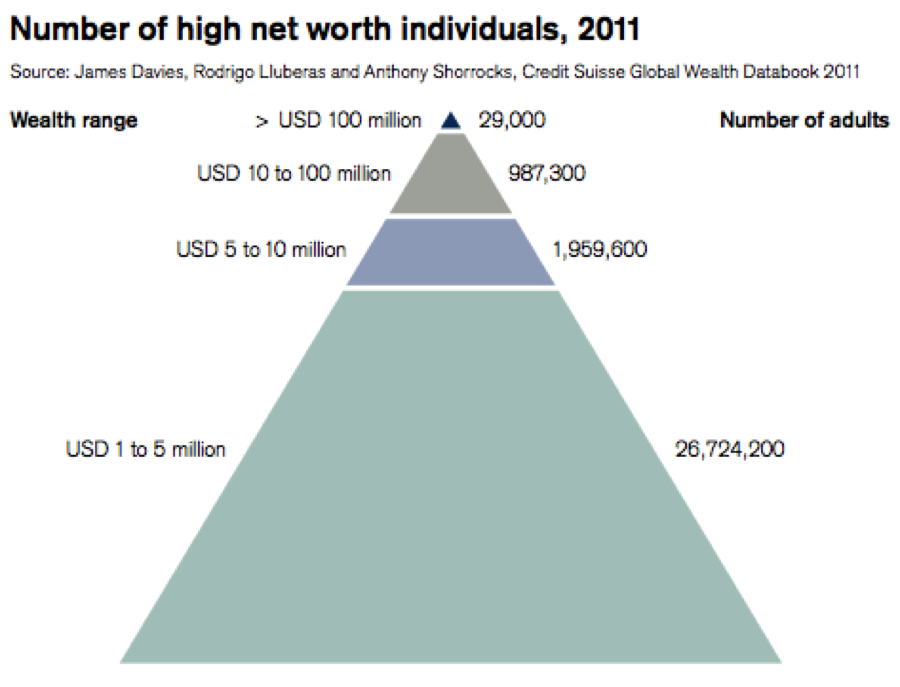
Subscribe to:
Posts (Atom)